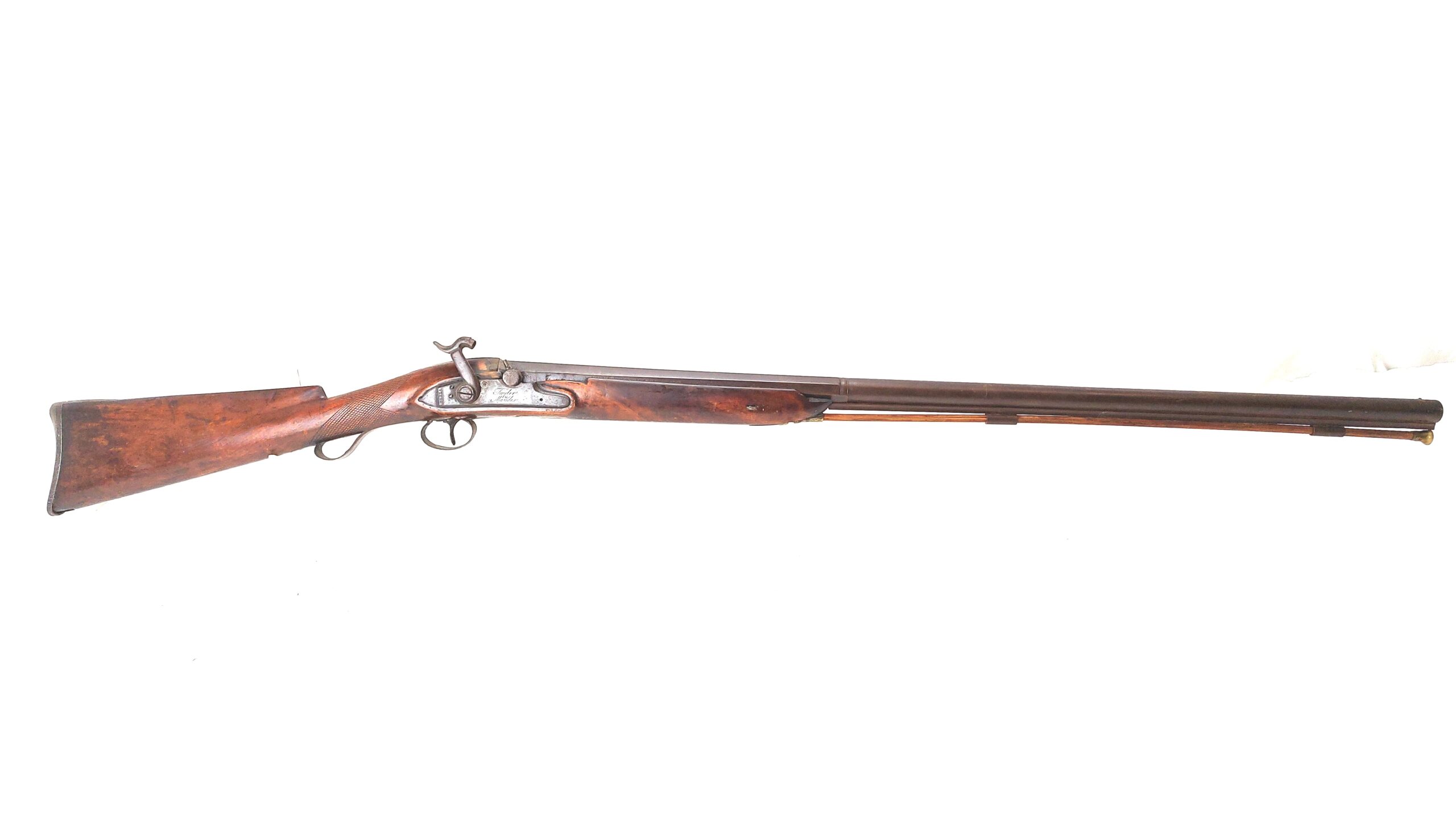
*British, c. 1825–1840, Large Bore Percussion Sporting Shotgun – Tayler & Mander – Named “Buller”*
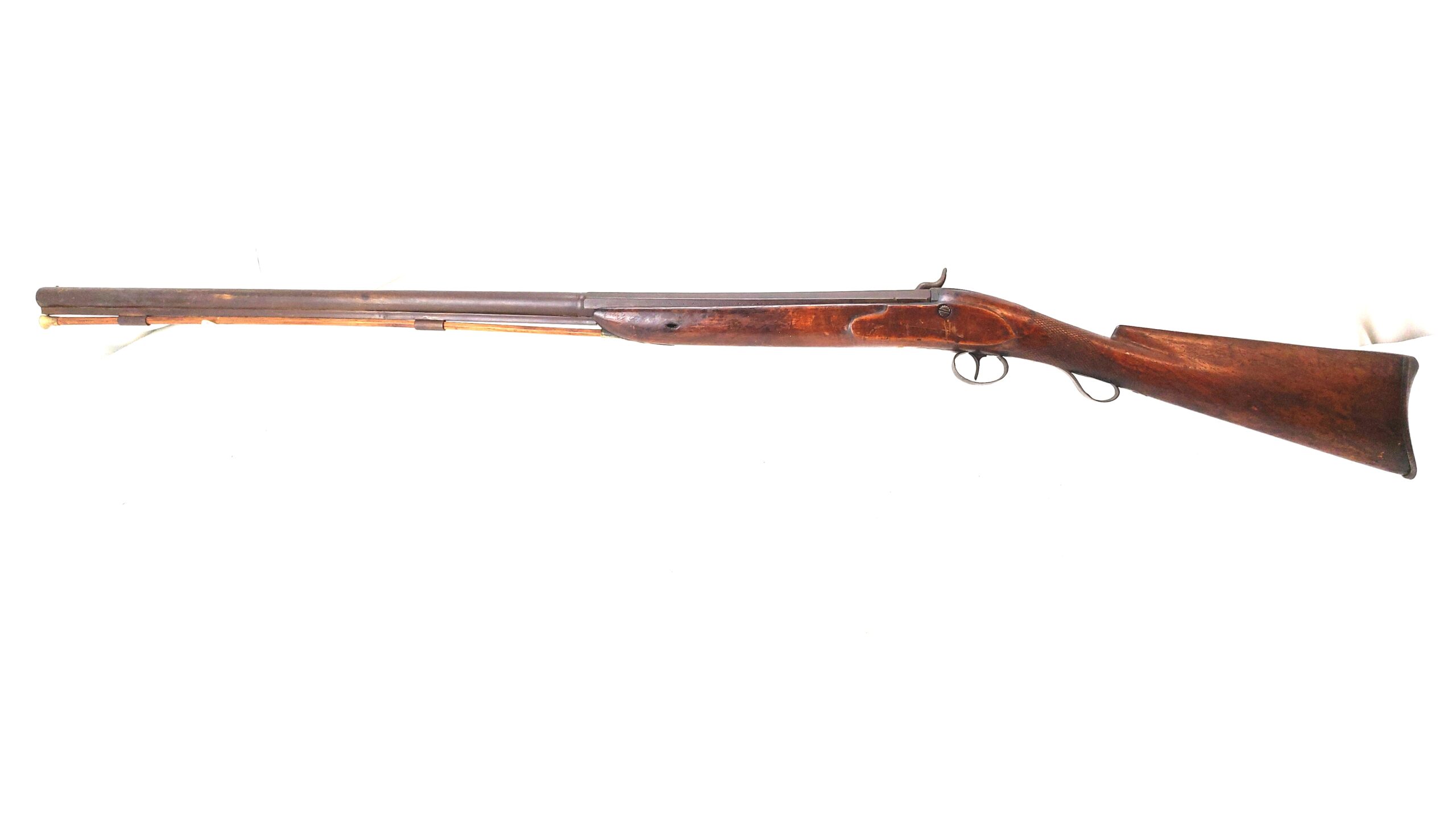
A refined early 19th century British percussion sporting shotgun by Tayler & Mander, displaying elegant proportions and quality Birmingham trade workmanship throughout.
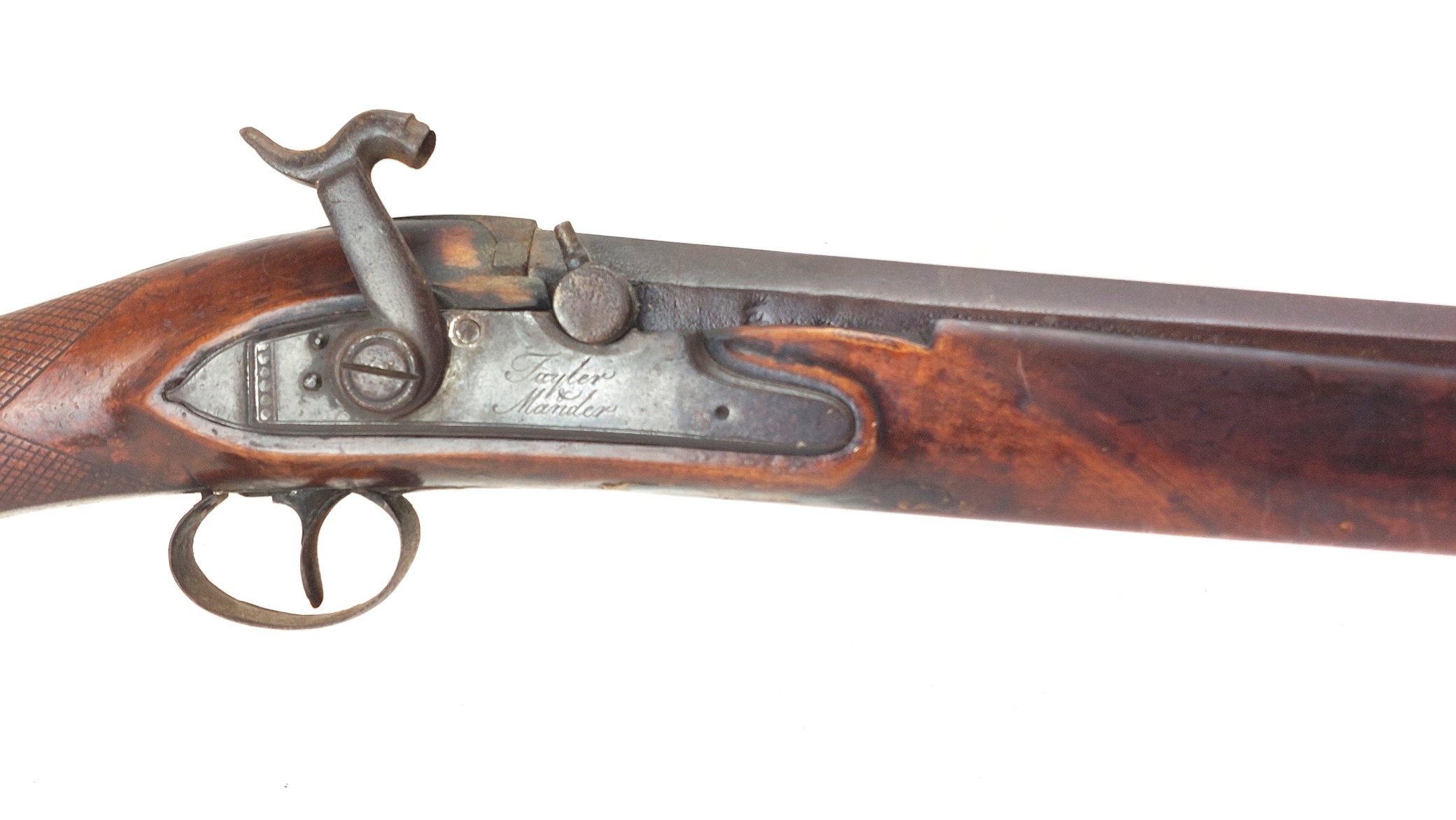
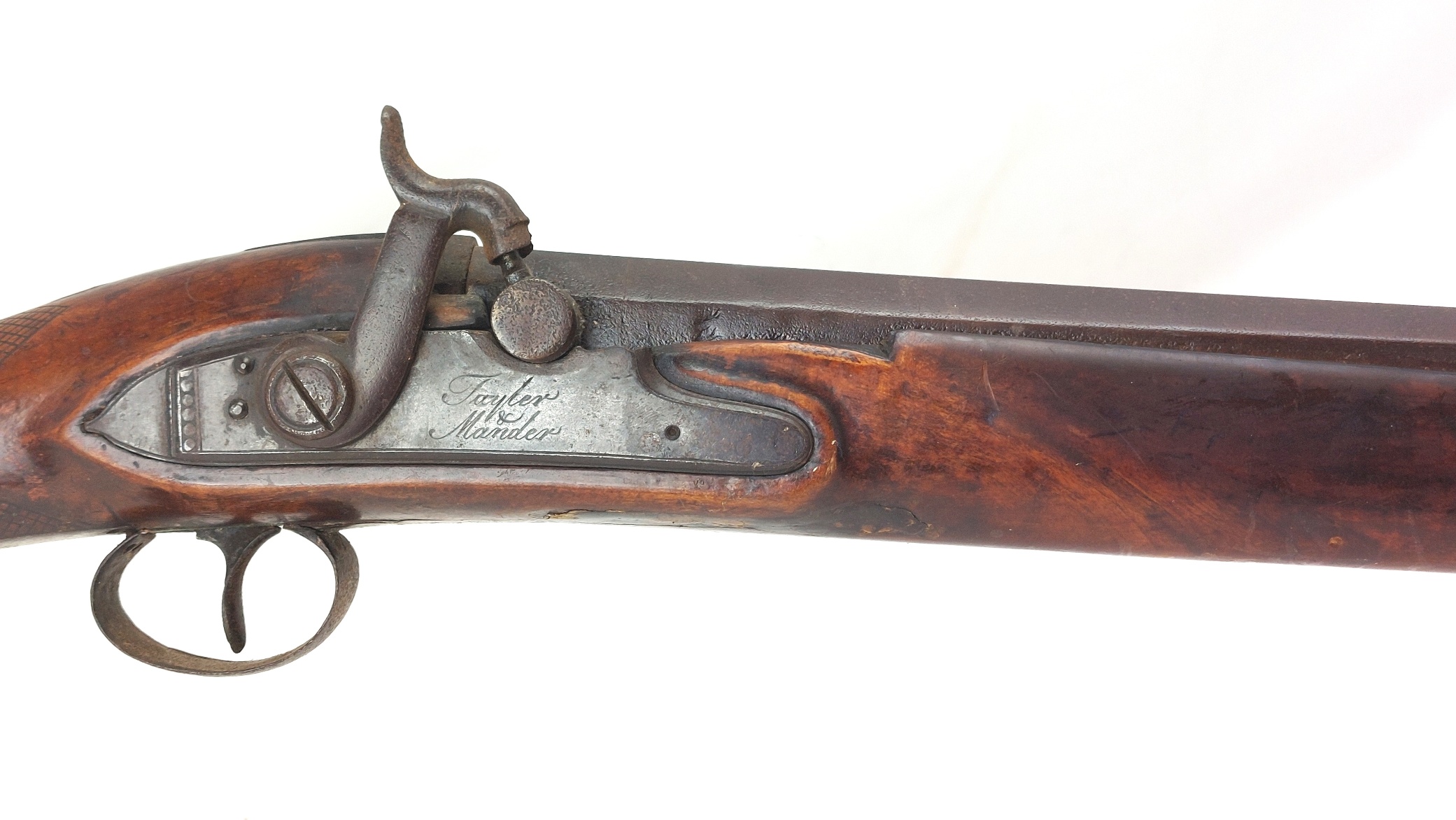
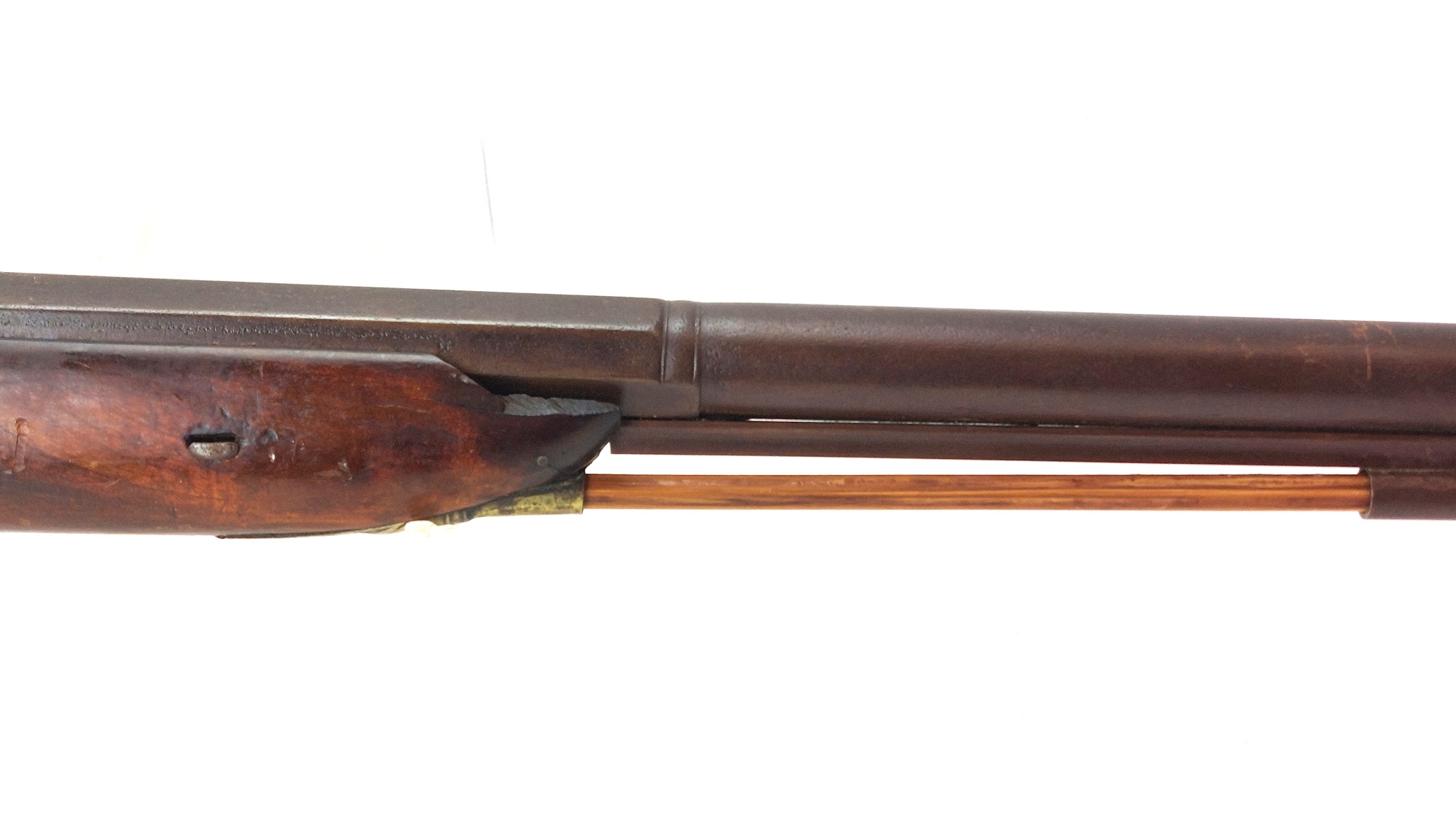
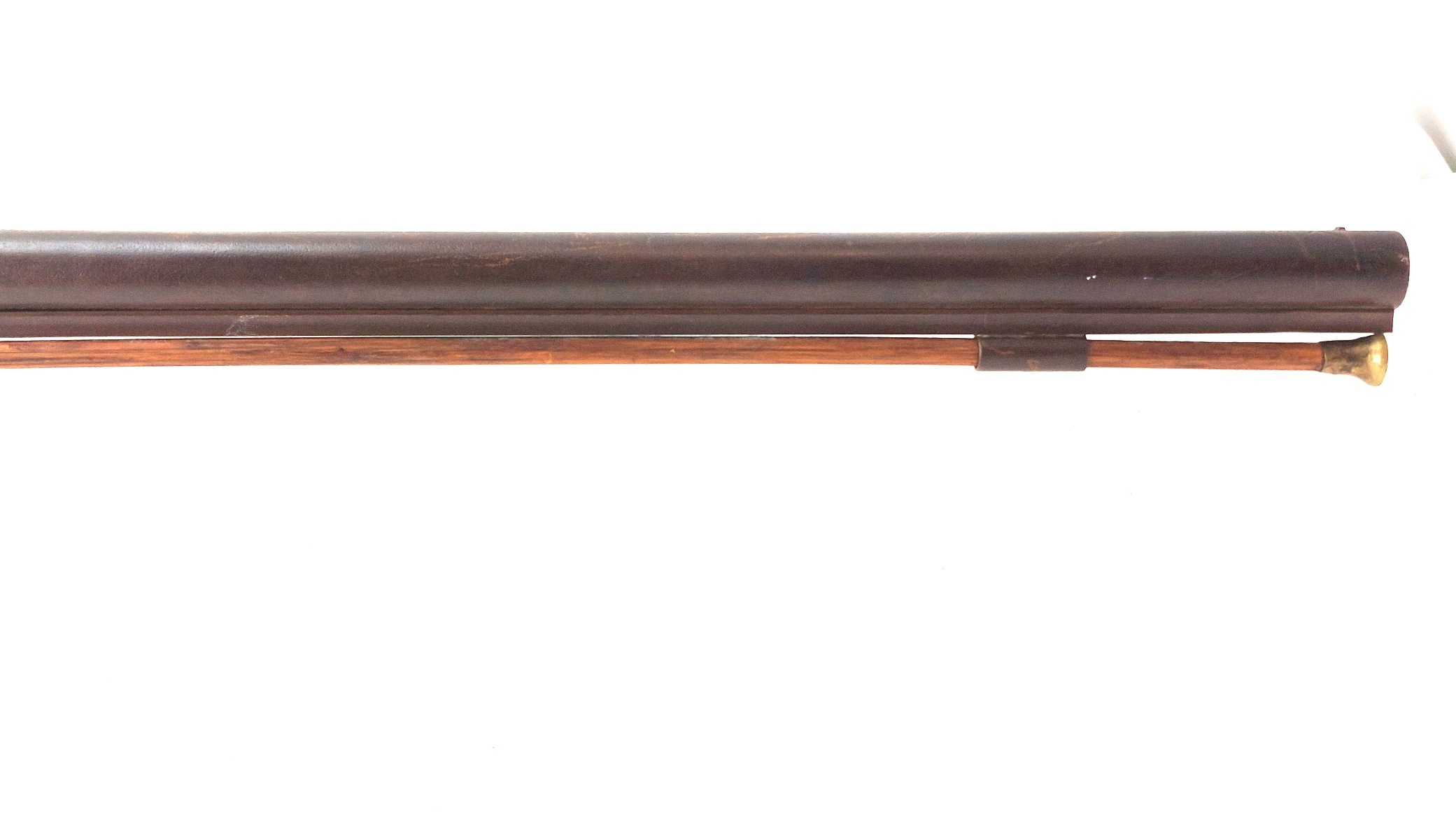
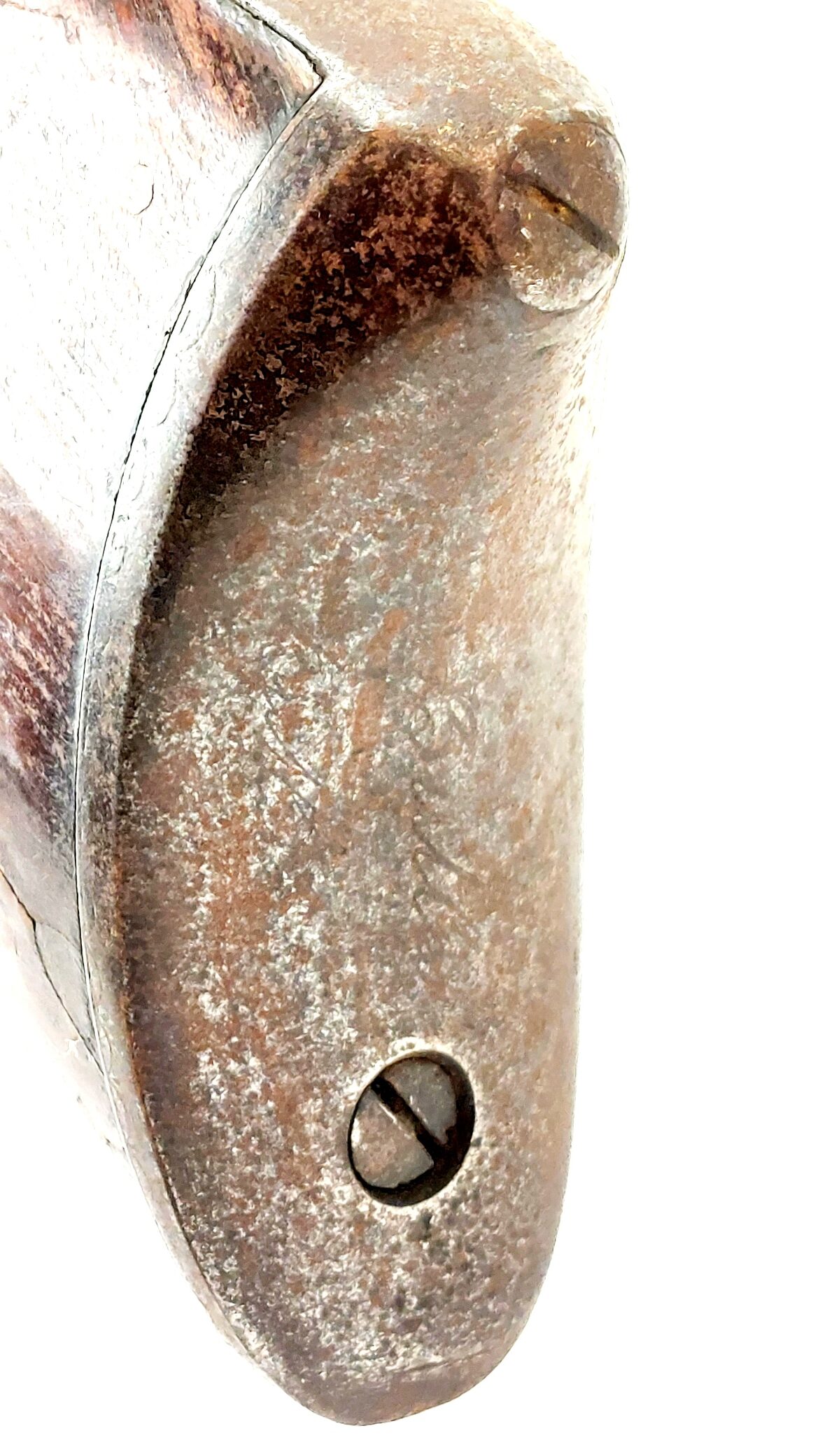
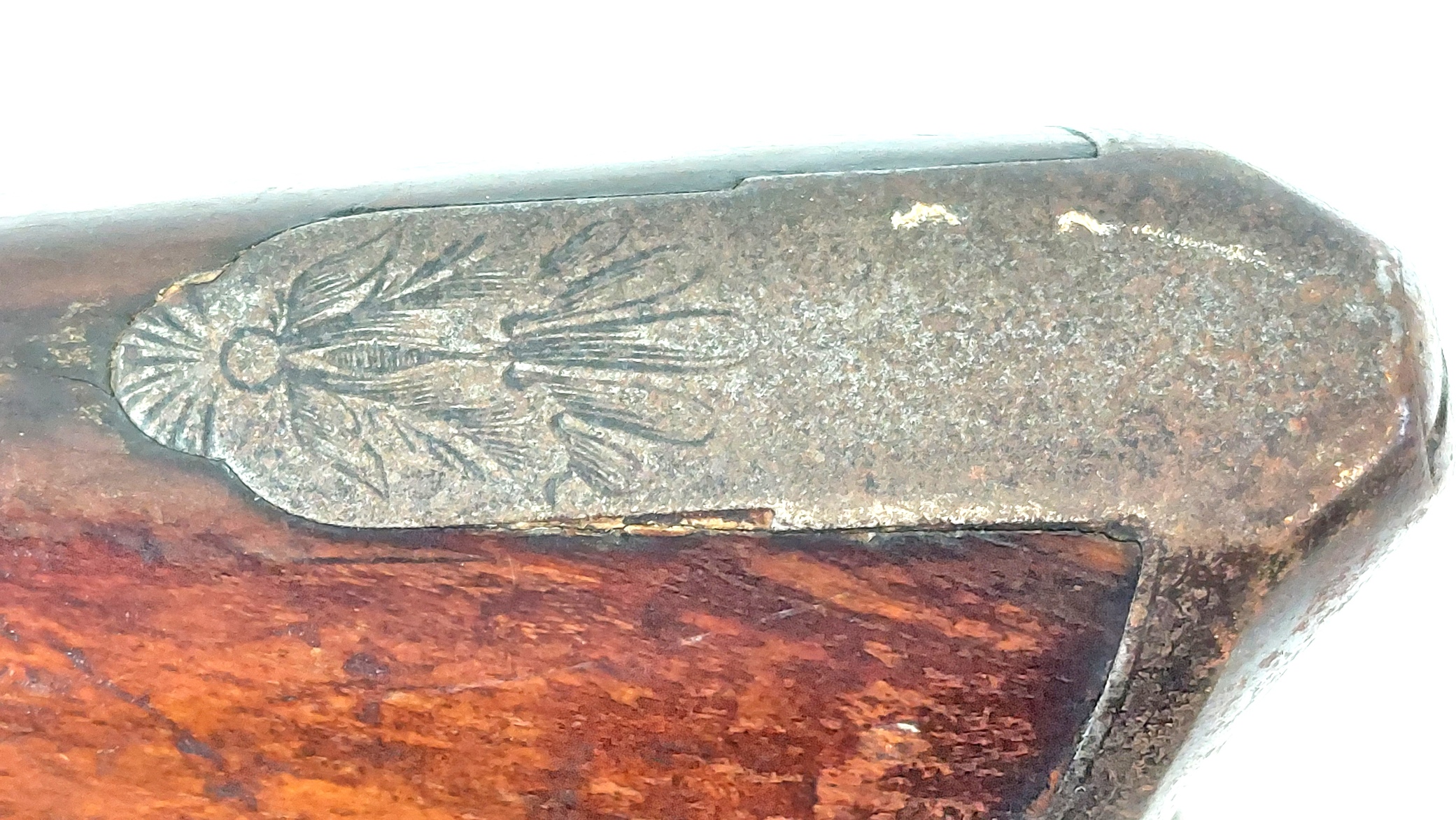
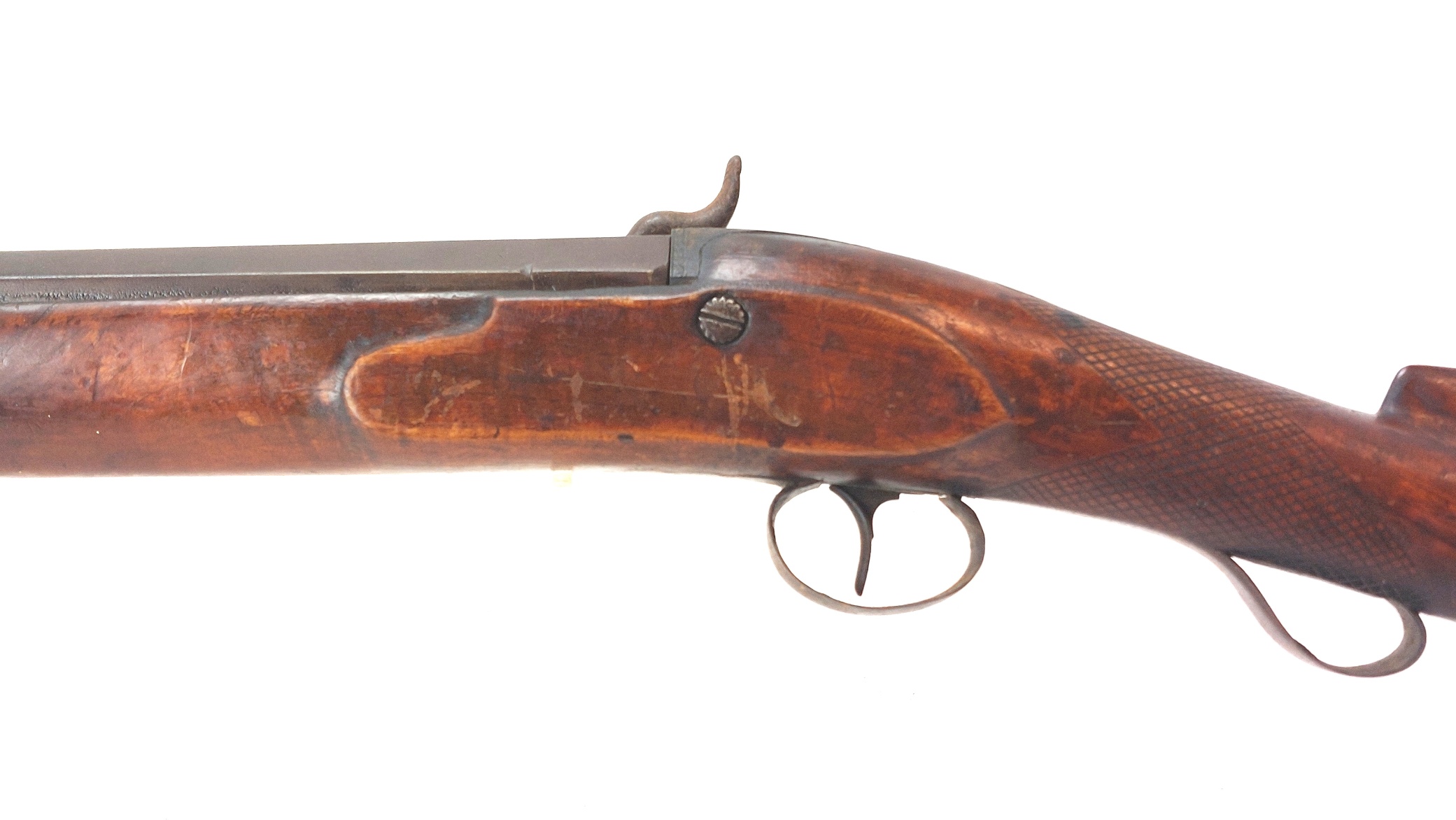
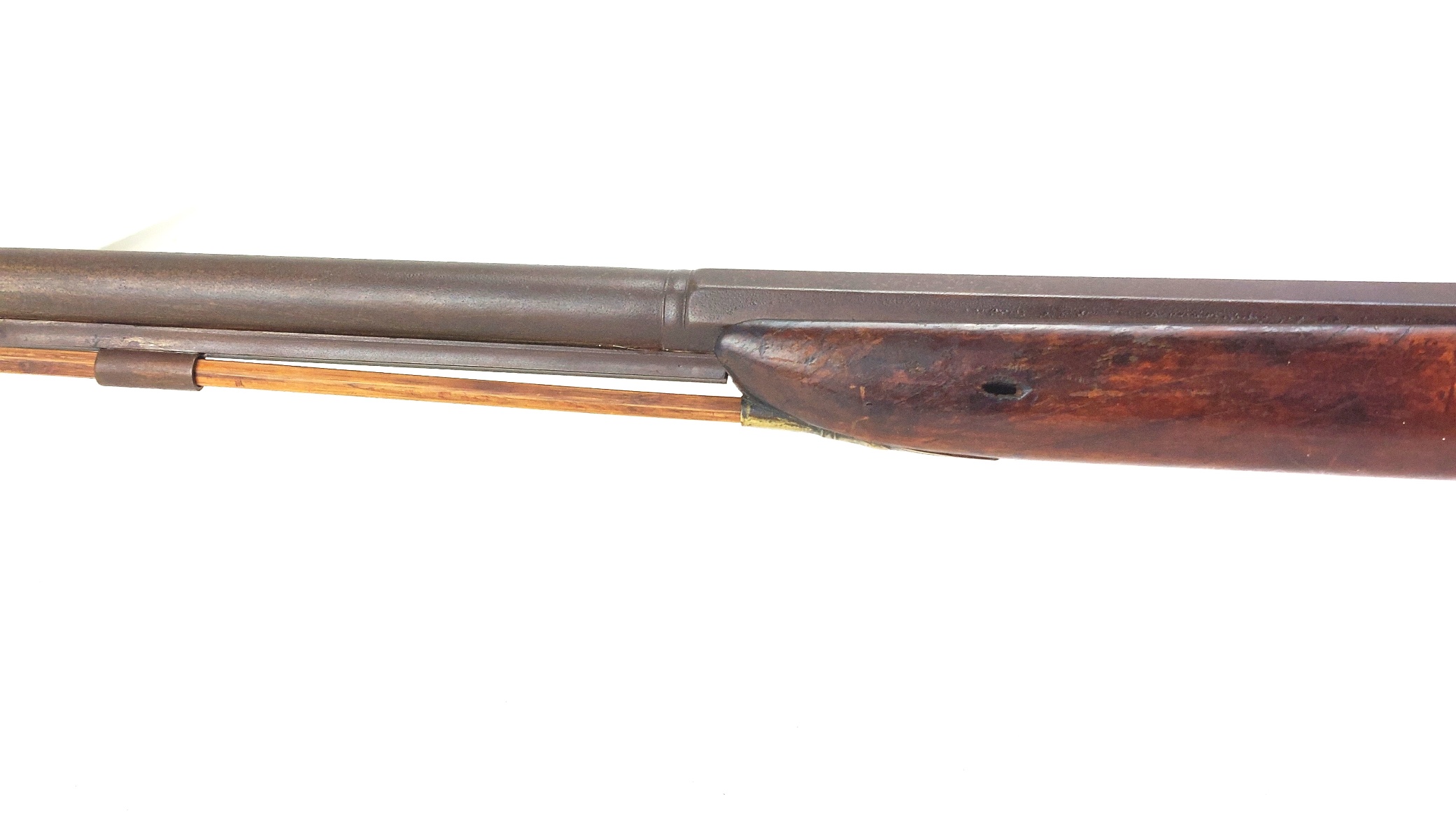
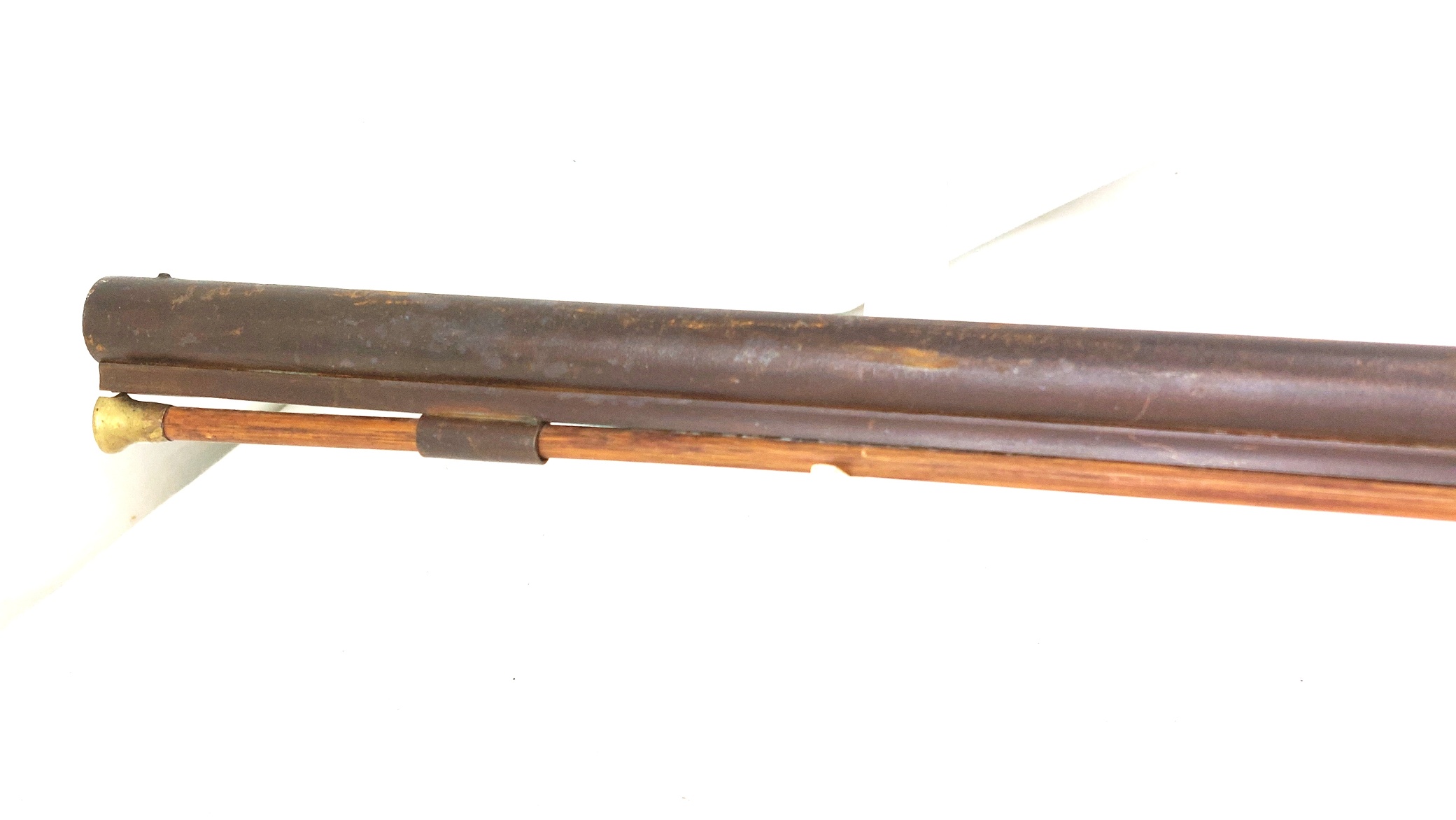
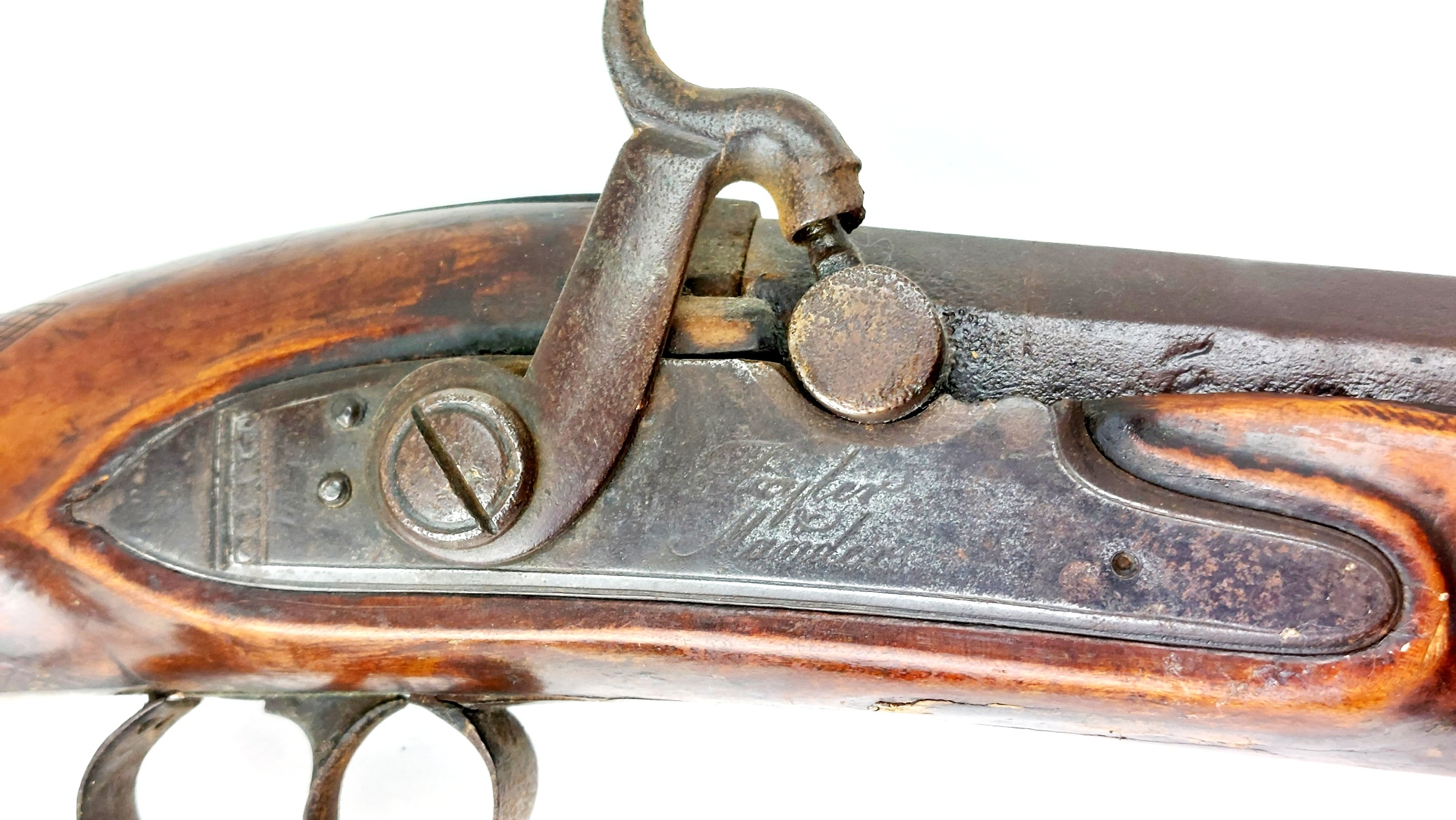
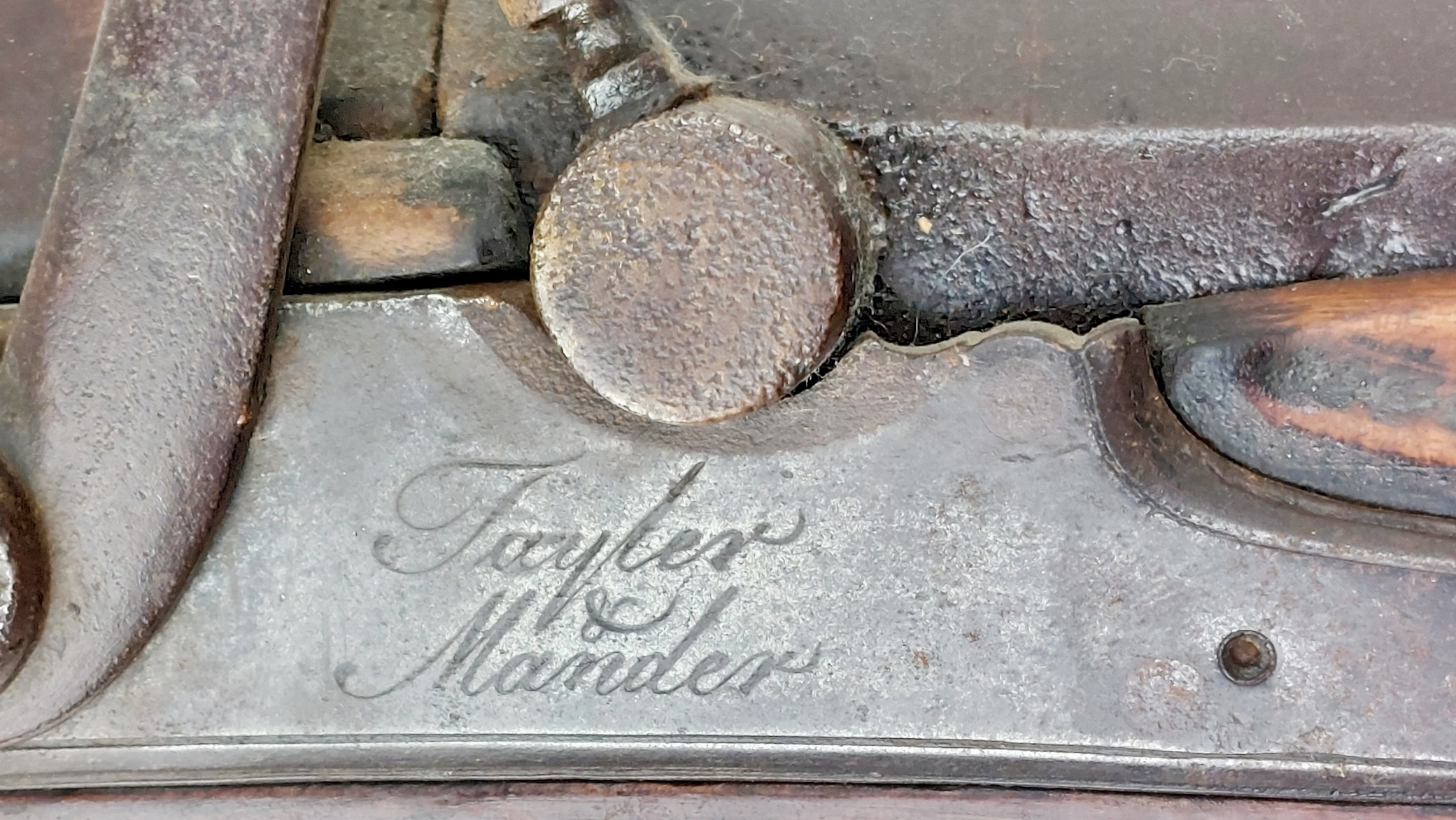
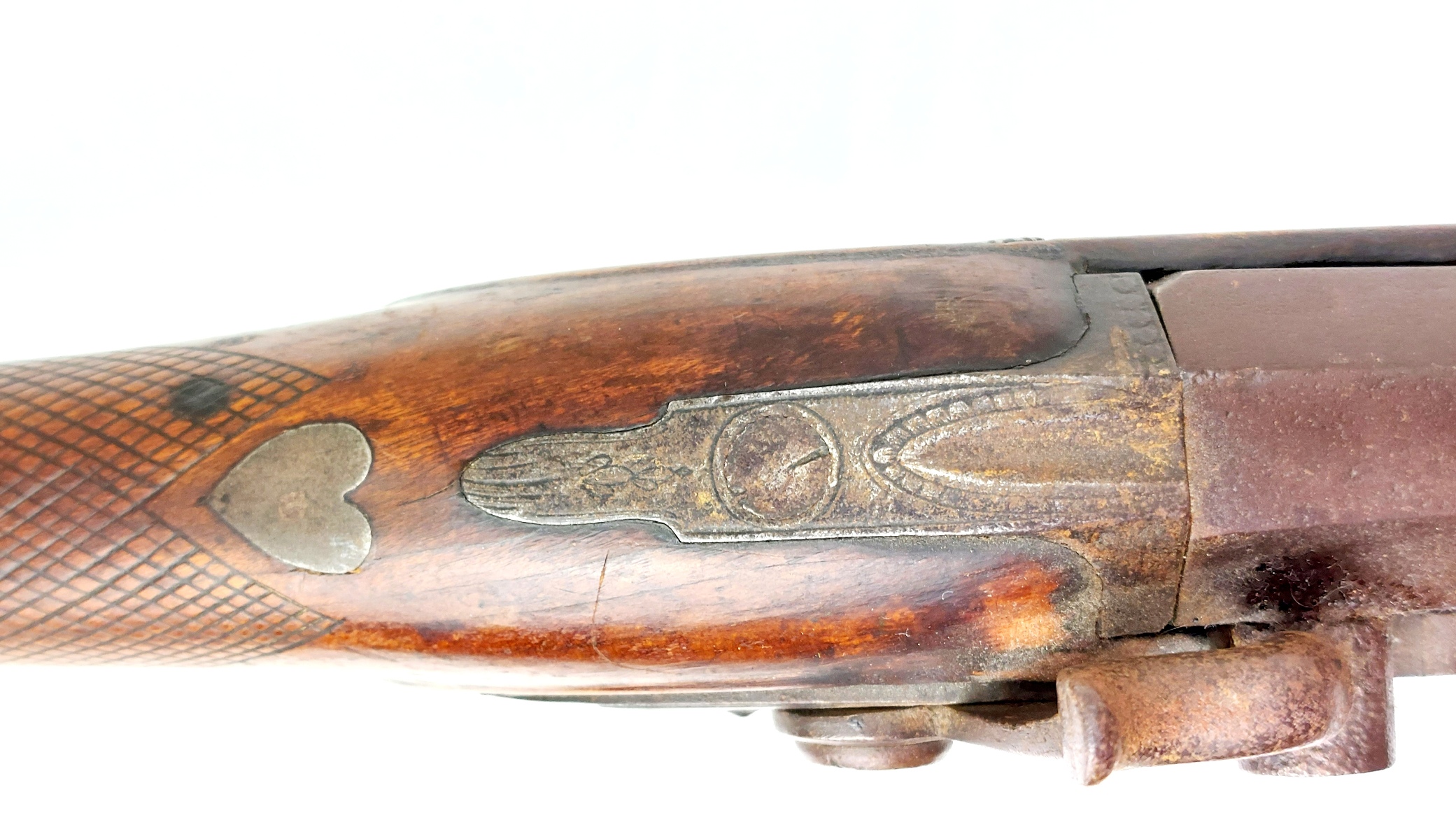
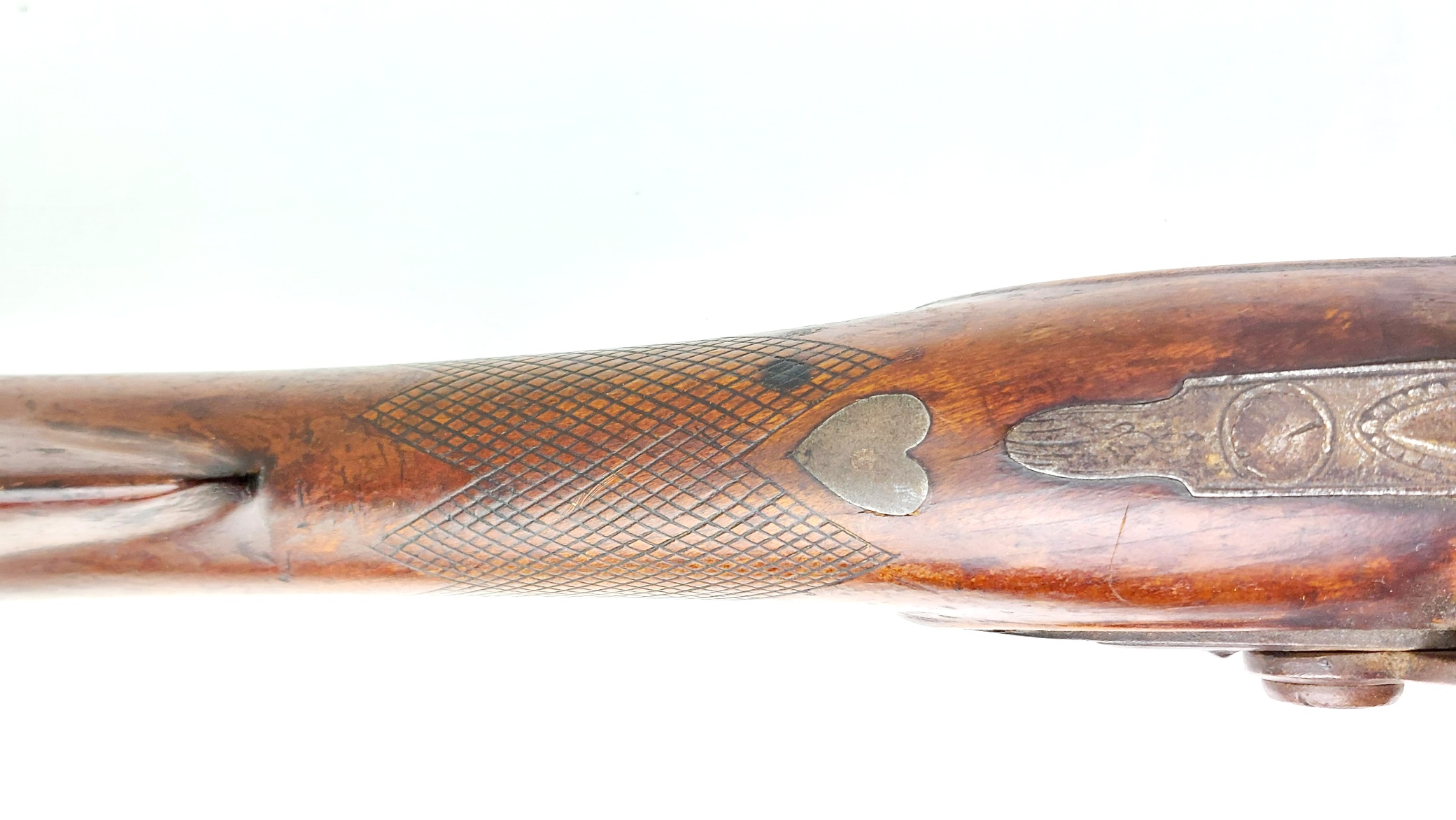
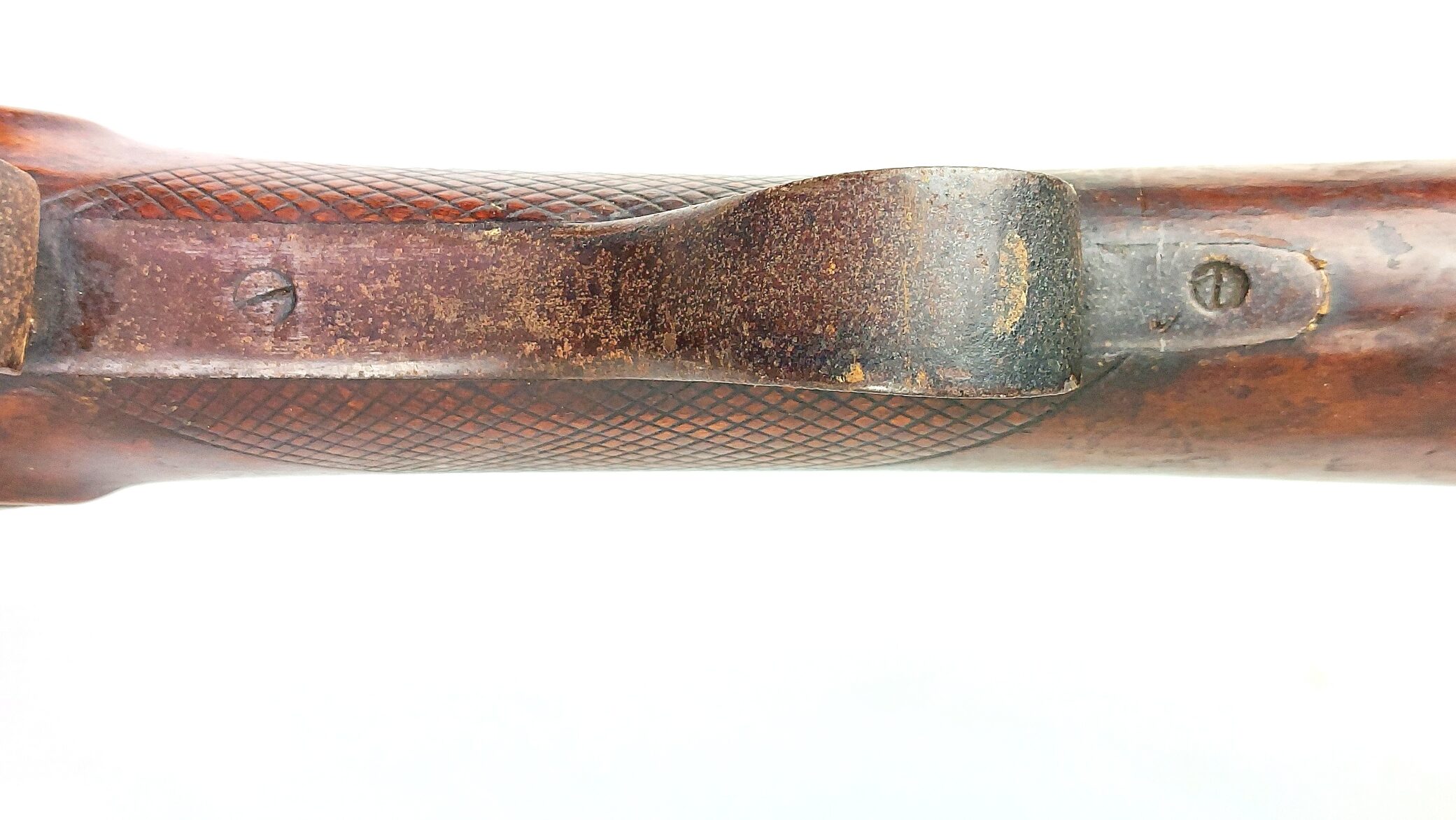
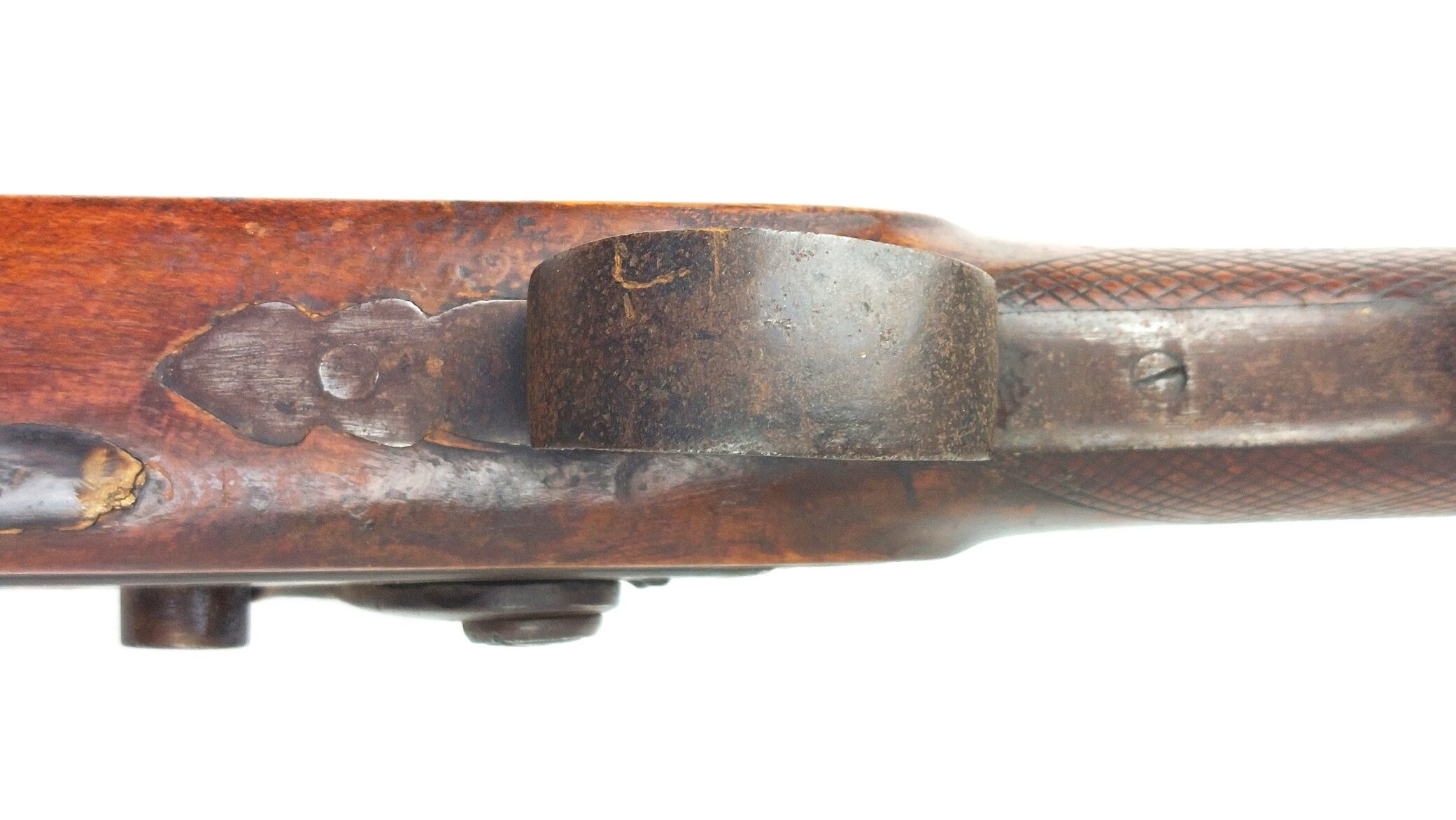
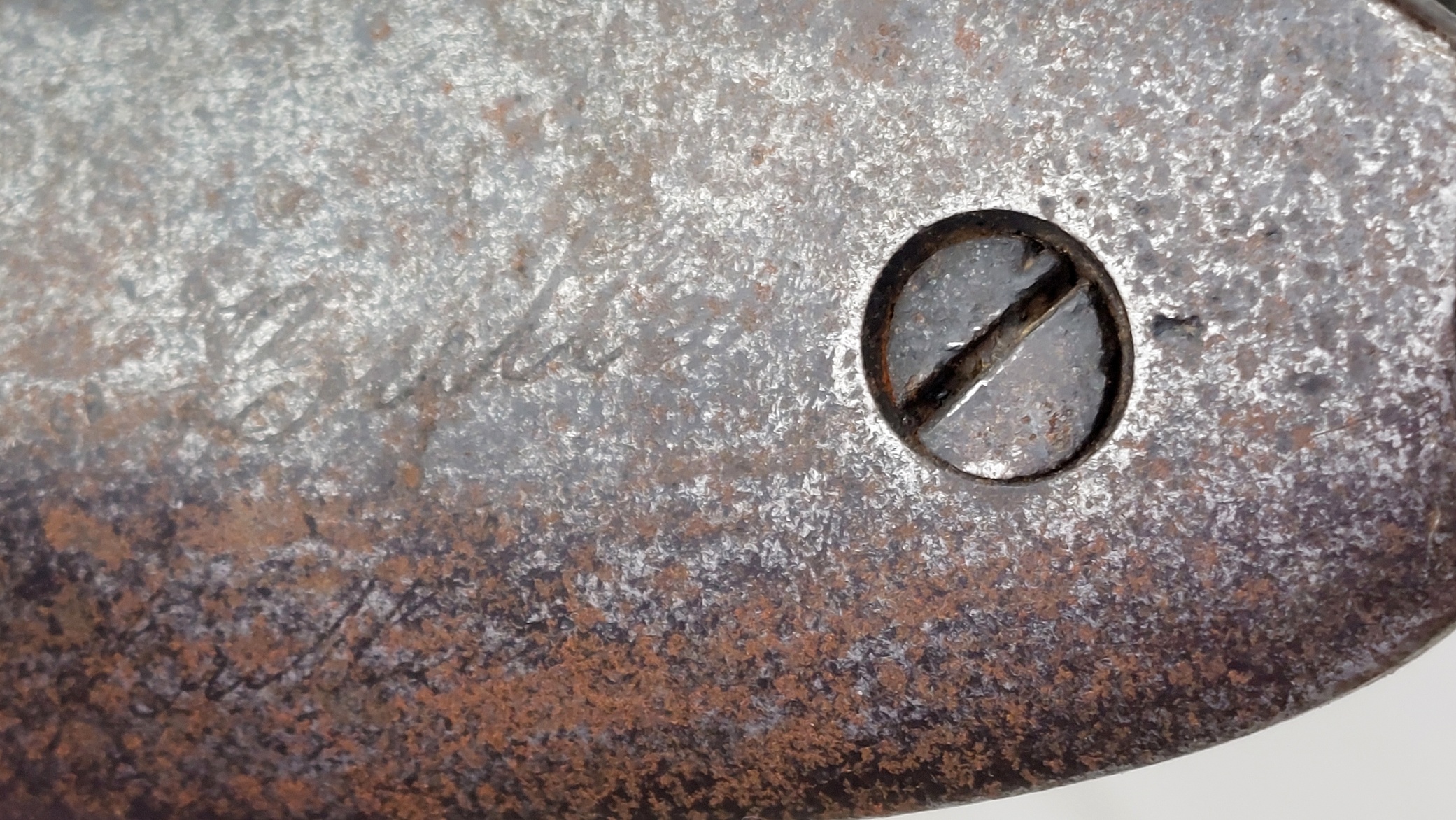
The gun is fitted with a long, well-balanced barrel of large bore, retaining an even aged patina. The flat lock plate is engraved in flowing script “Tayler & Mander” and mounted with a classic dolphin-form hammer. The furniture is of steel, including an engraved top tang with radiating foliate motif, decorative side plate, and shaped butt plate.
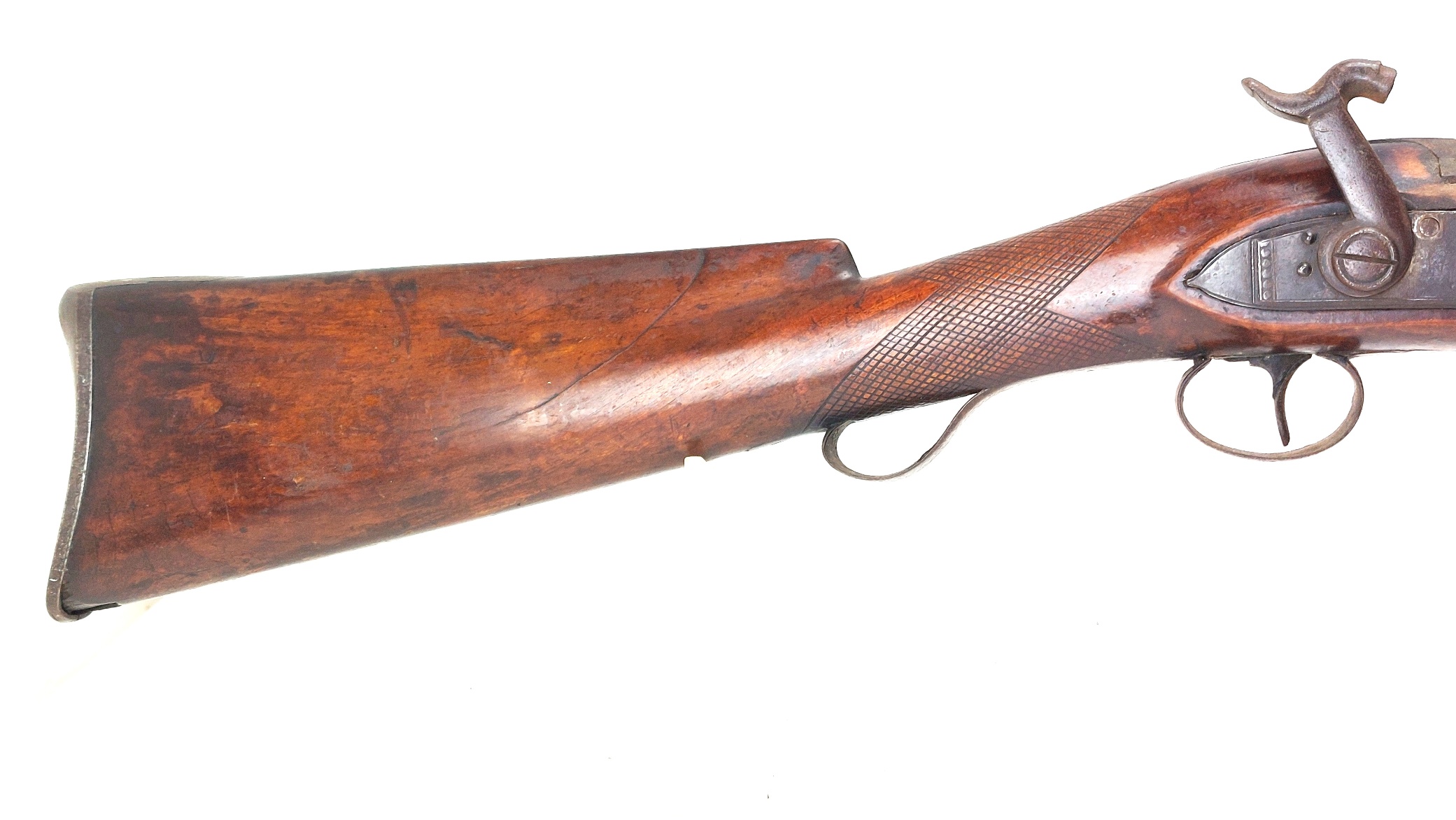
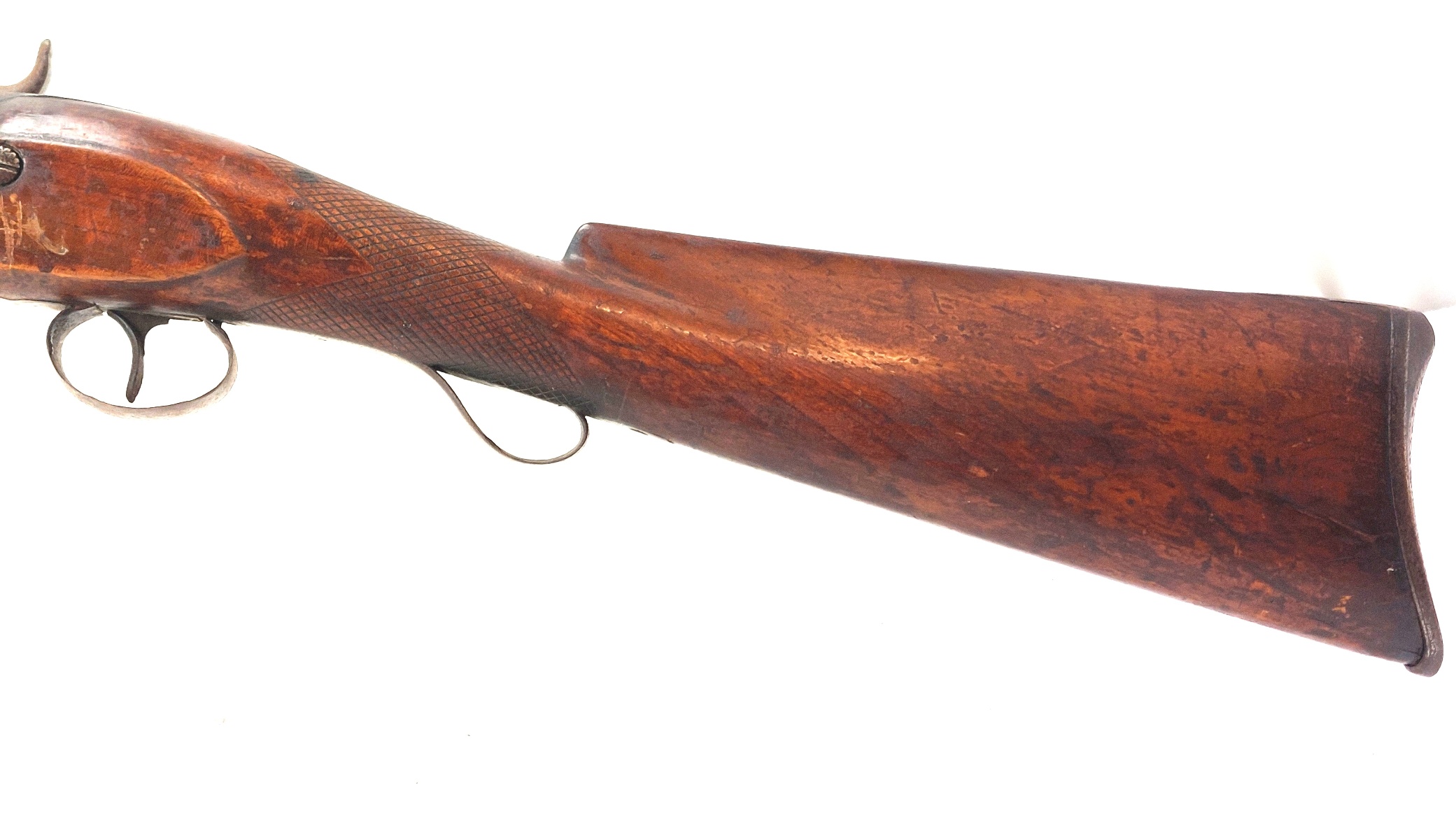
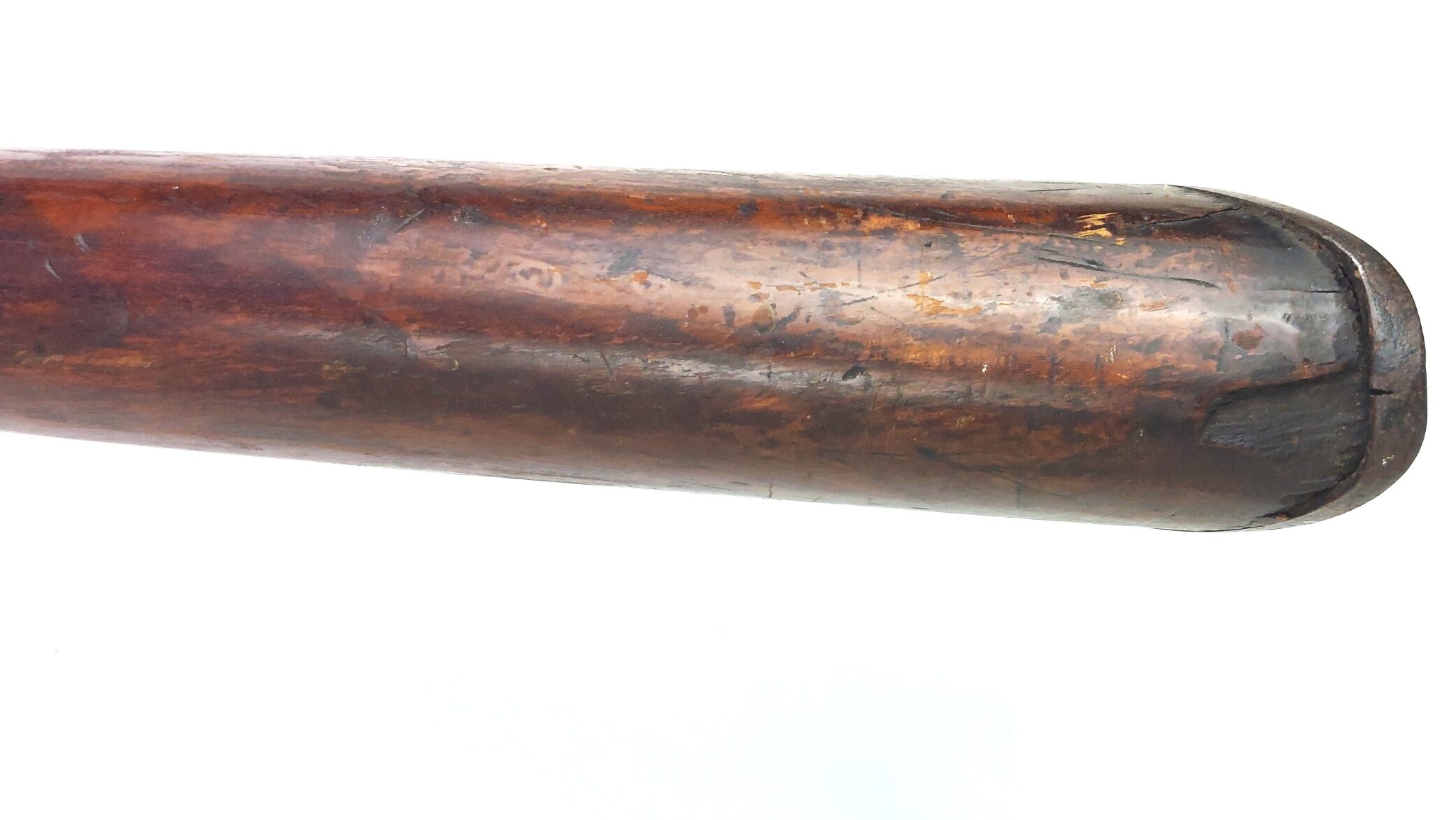
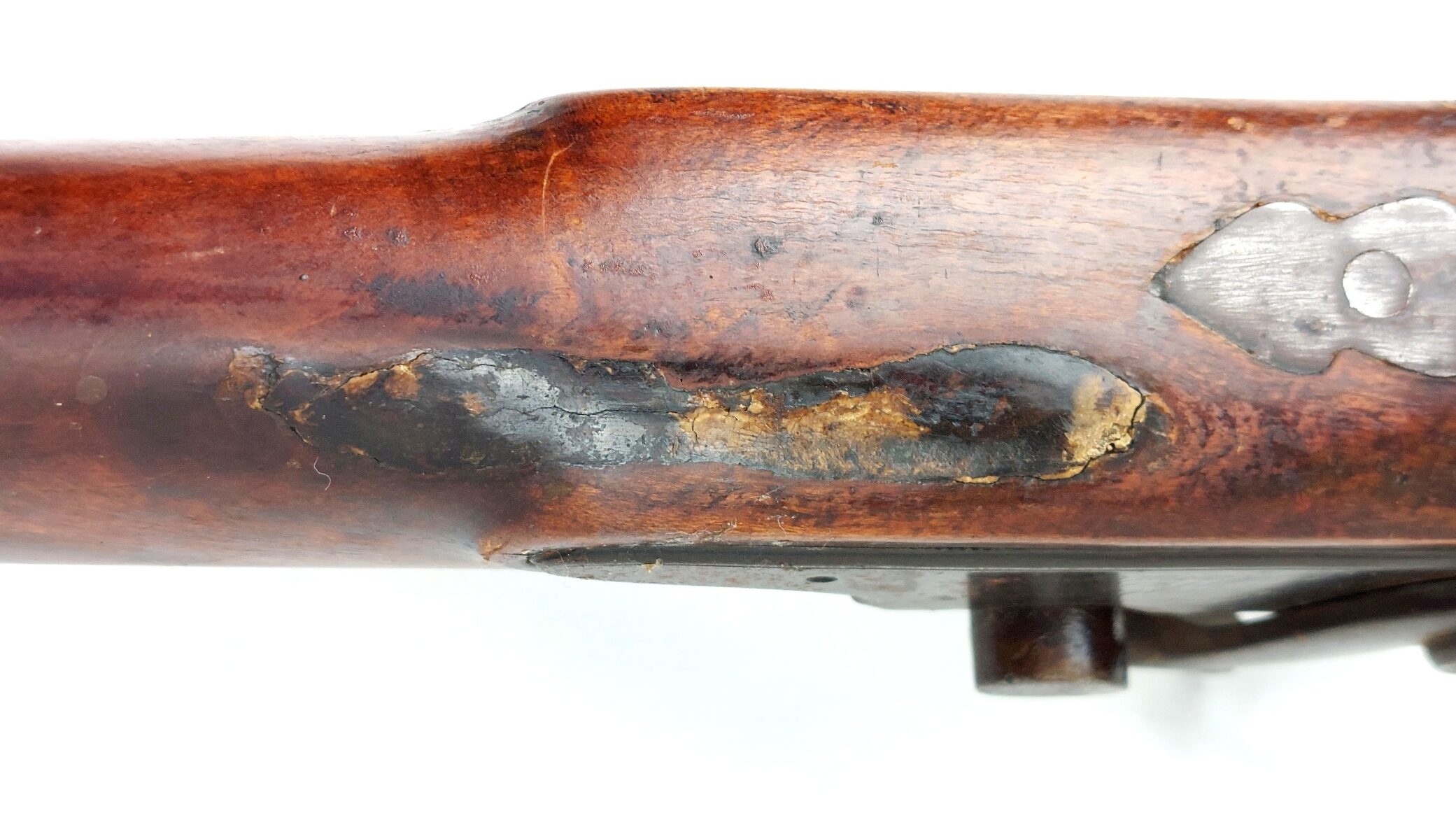
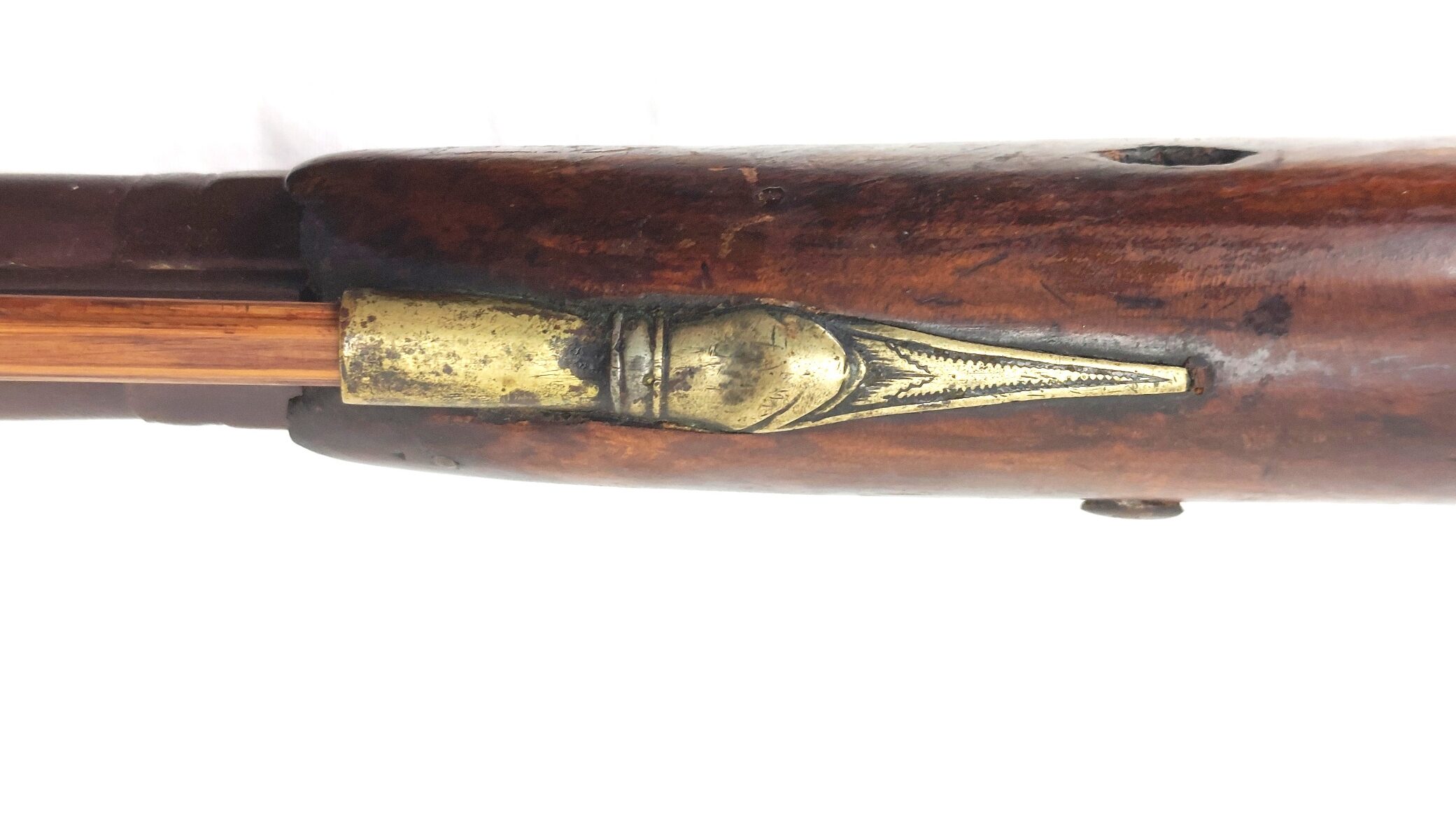
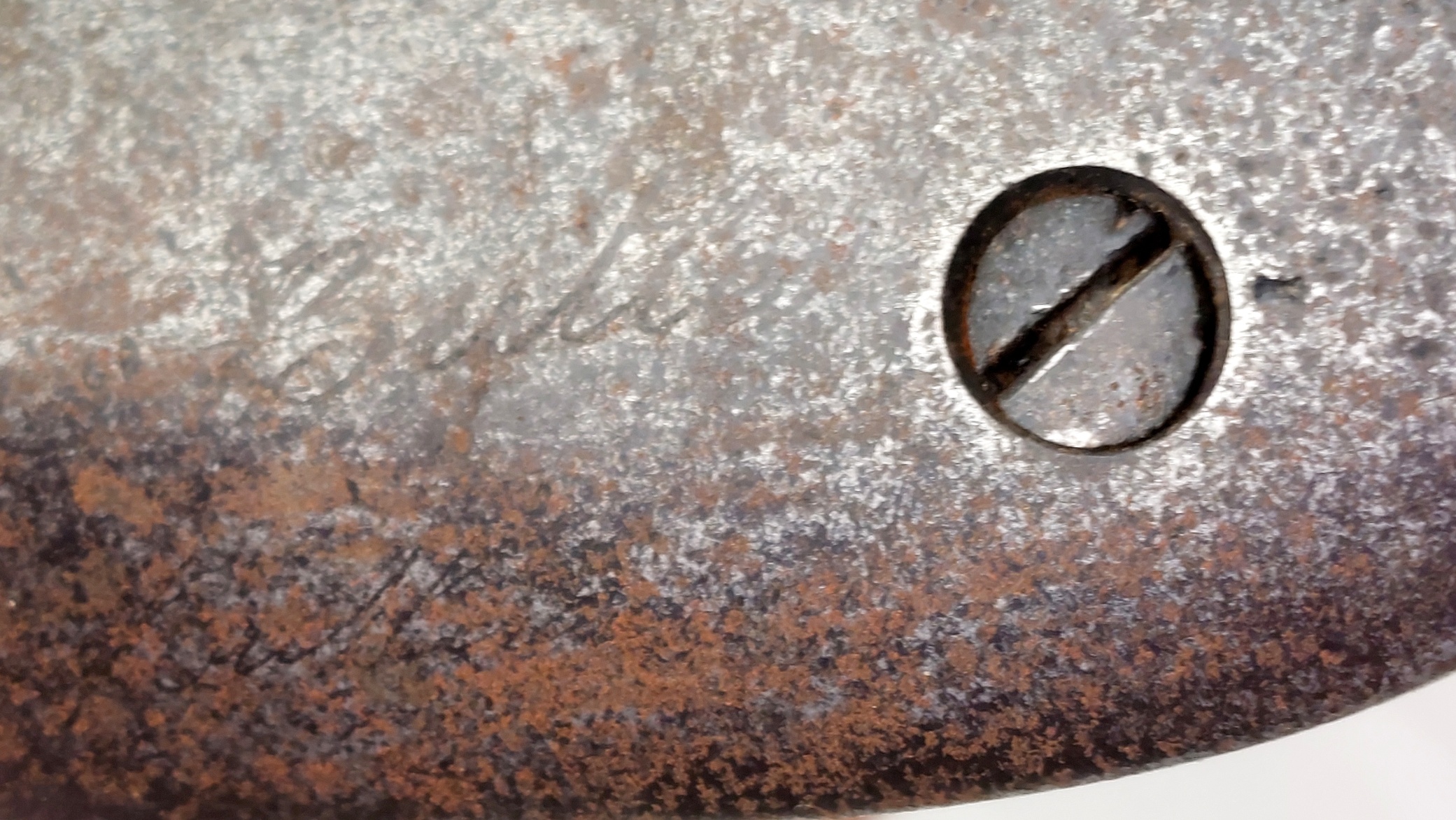
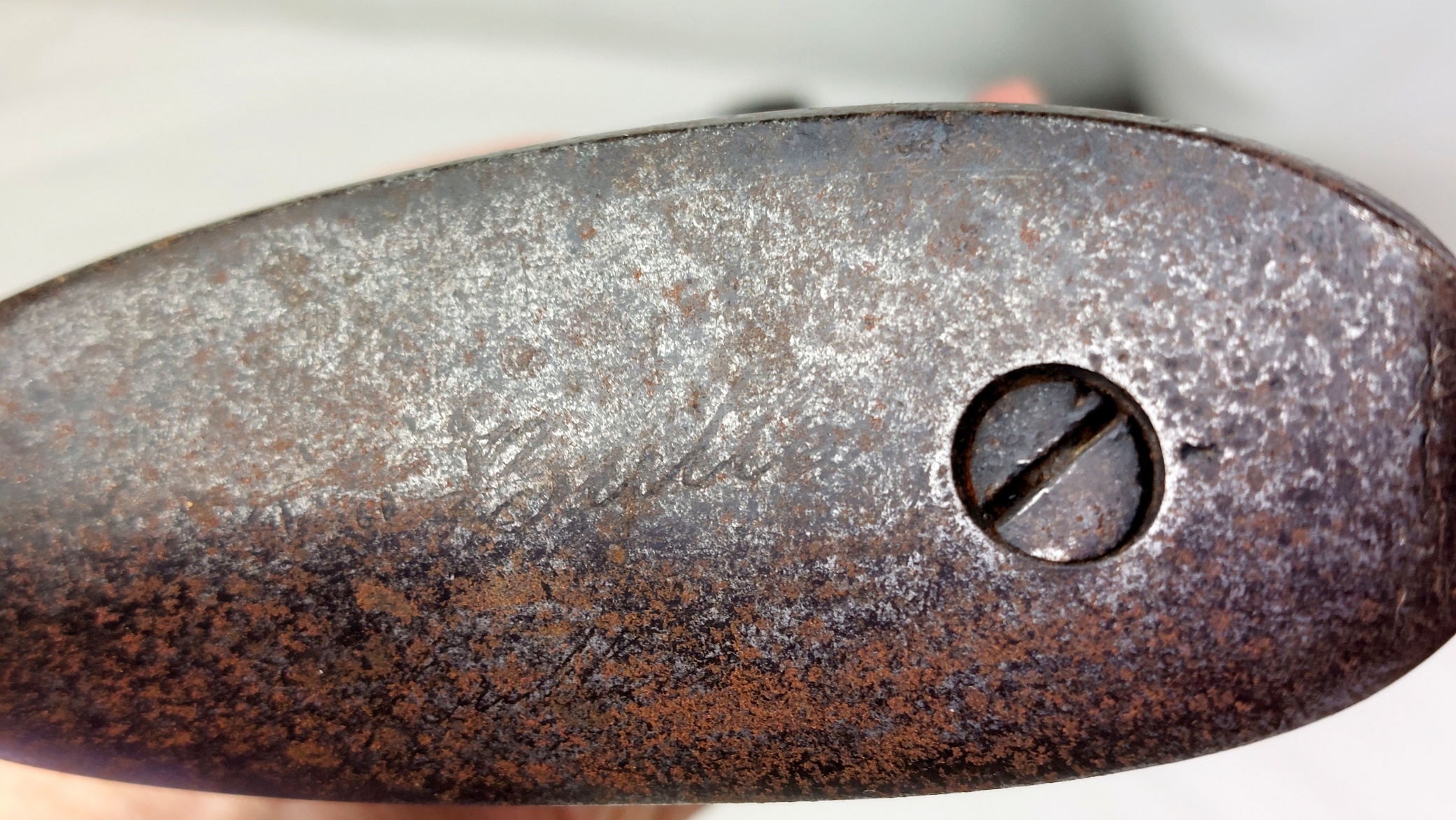
The walnut stock is of pleasing tone and figure, featuring well-executed chequering at the wrist and a heart-shaped silver escutcheon inset to the underside. The butt is inscribed in cursive script, appearing to read “Buller.” The overall architecture is slender and refined, typical of a quality sporting fowler rather than a heavy wildfowling piece.
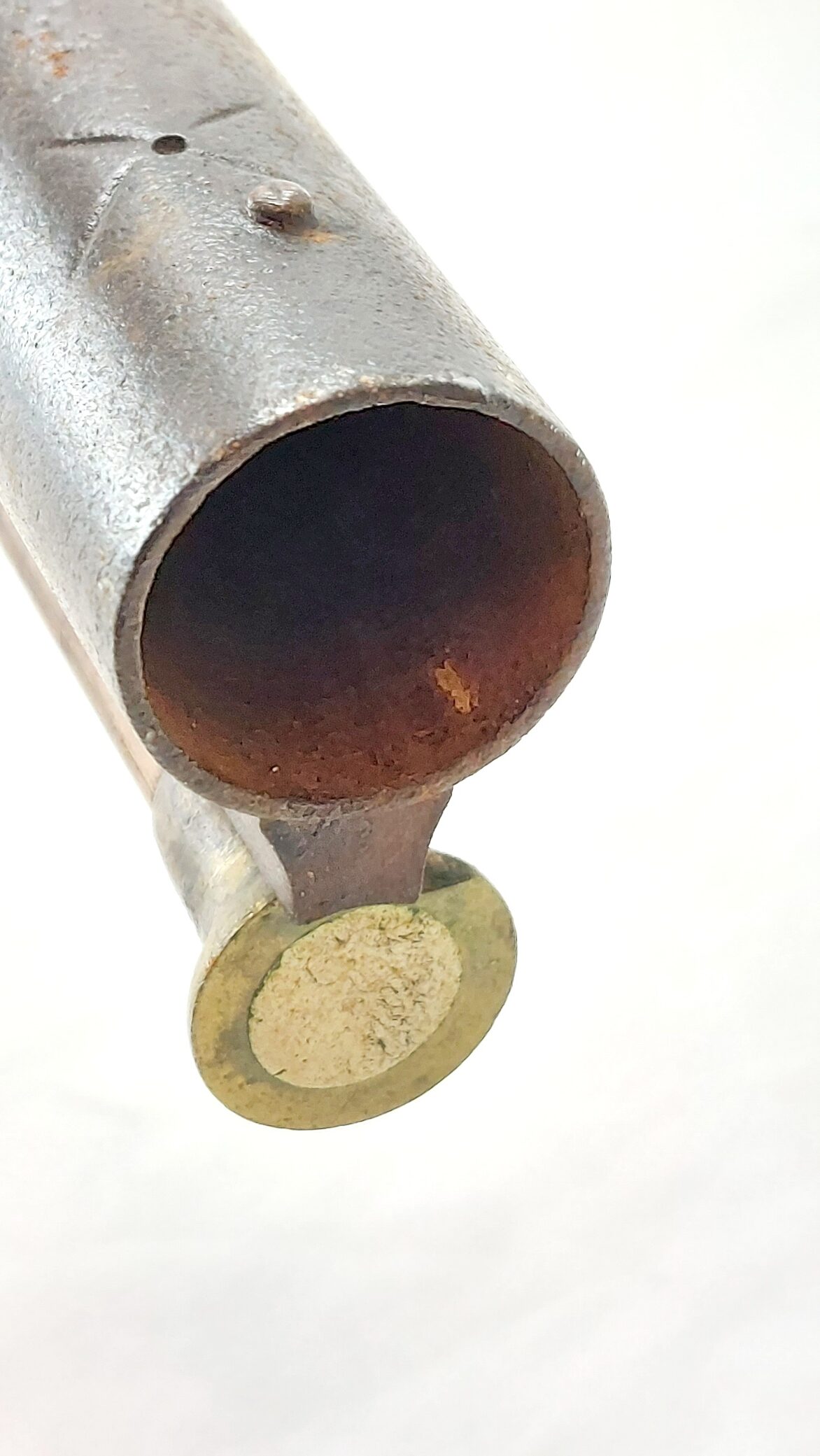
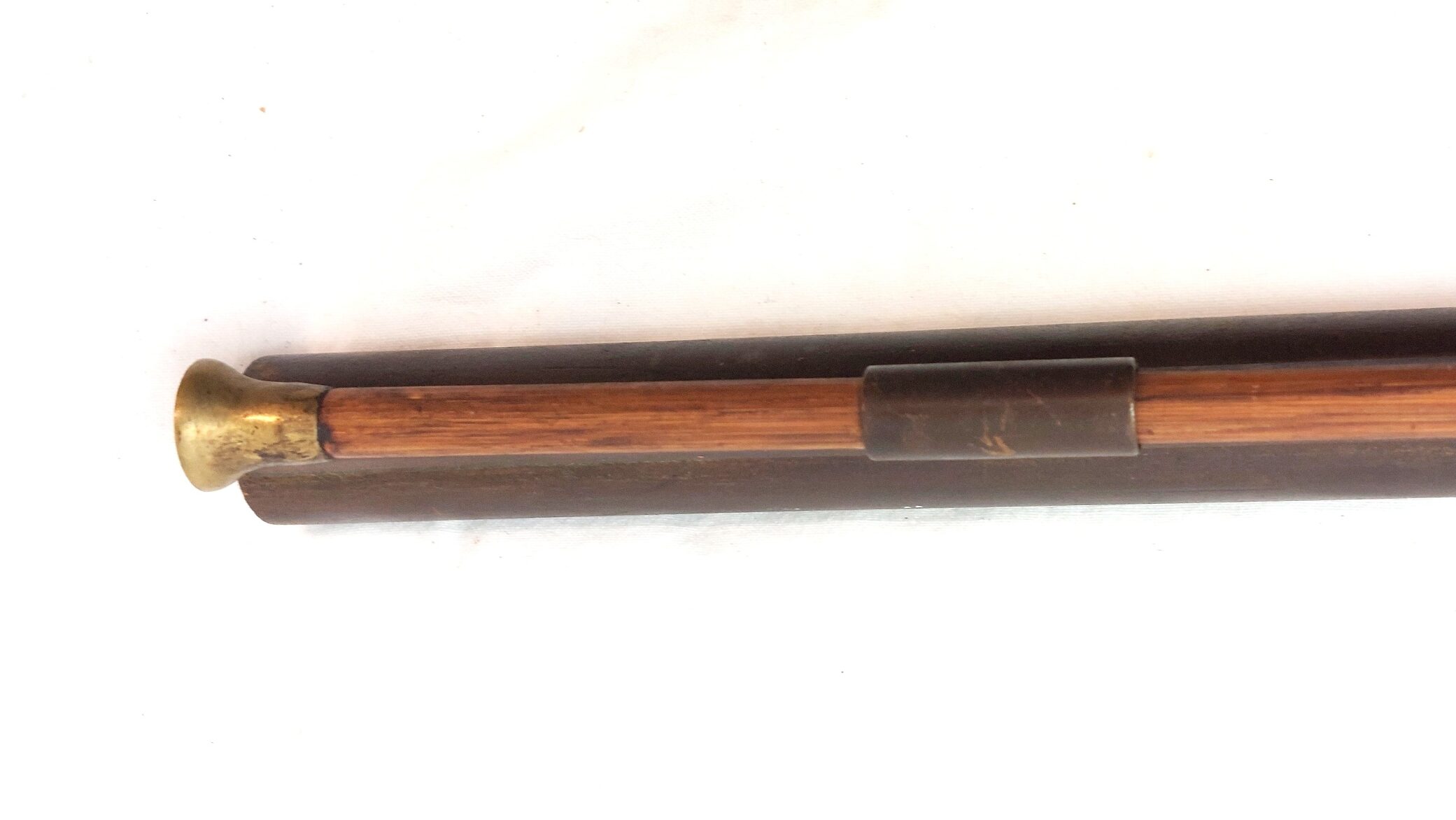
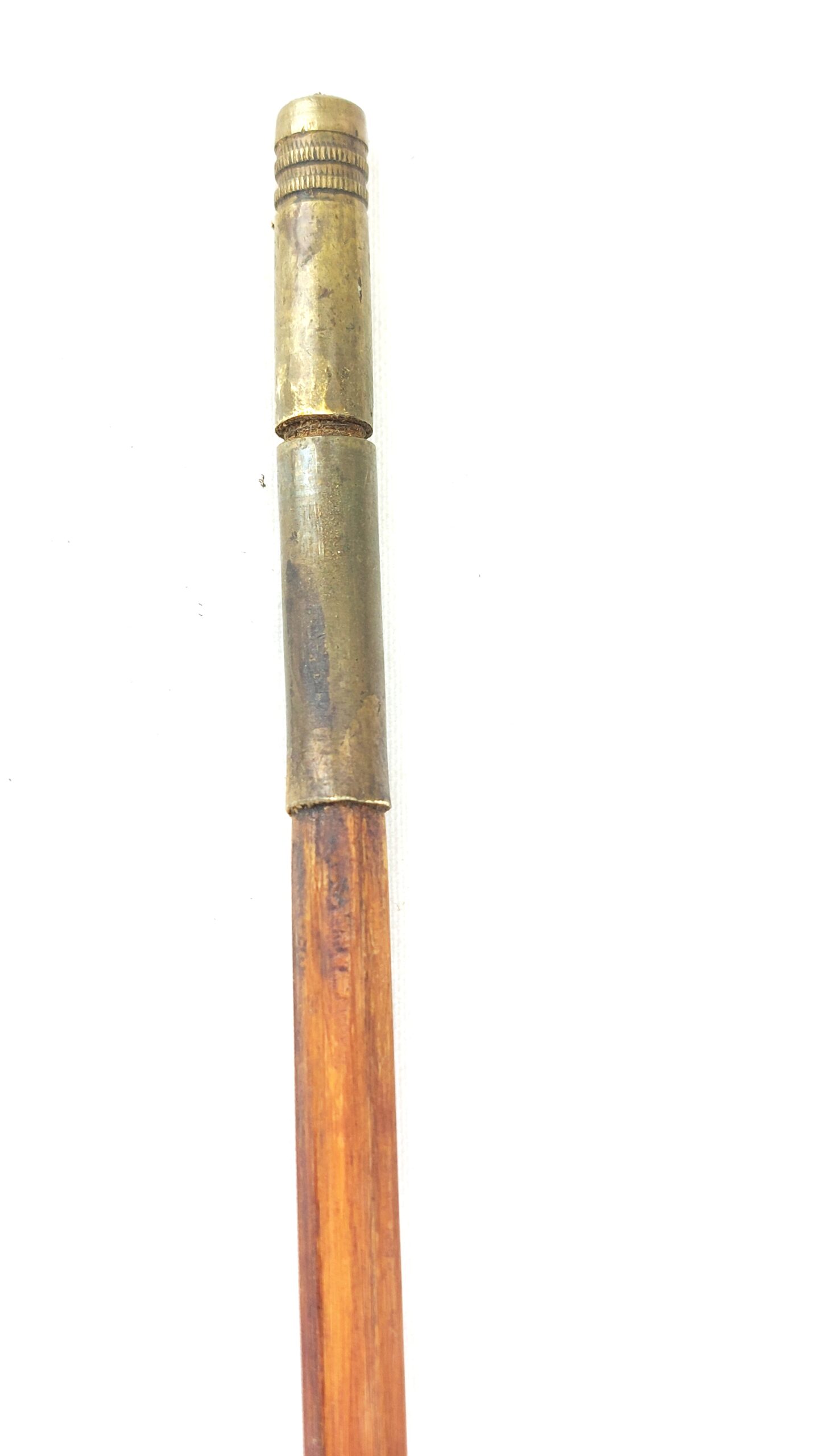
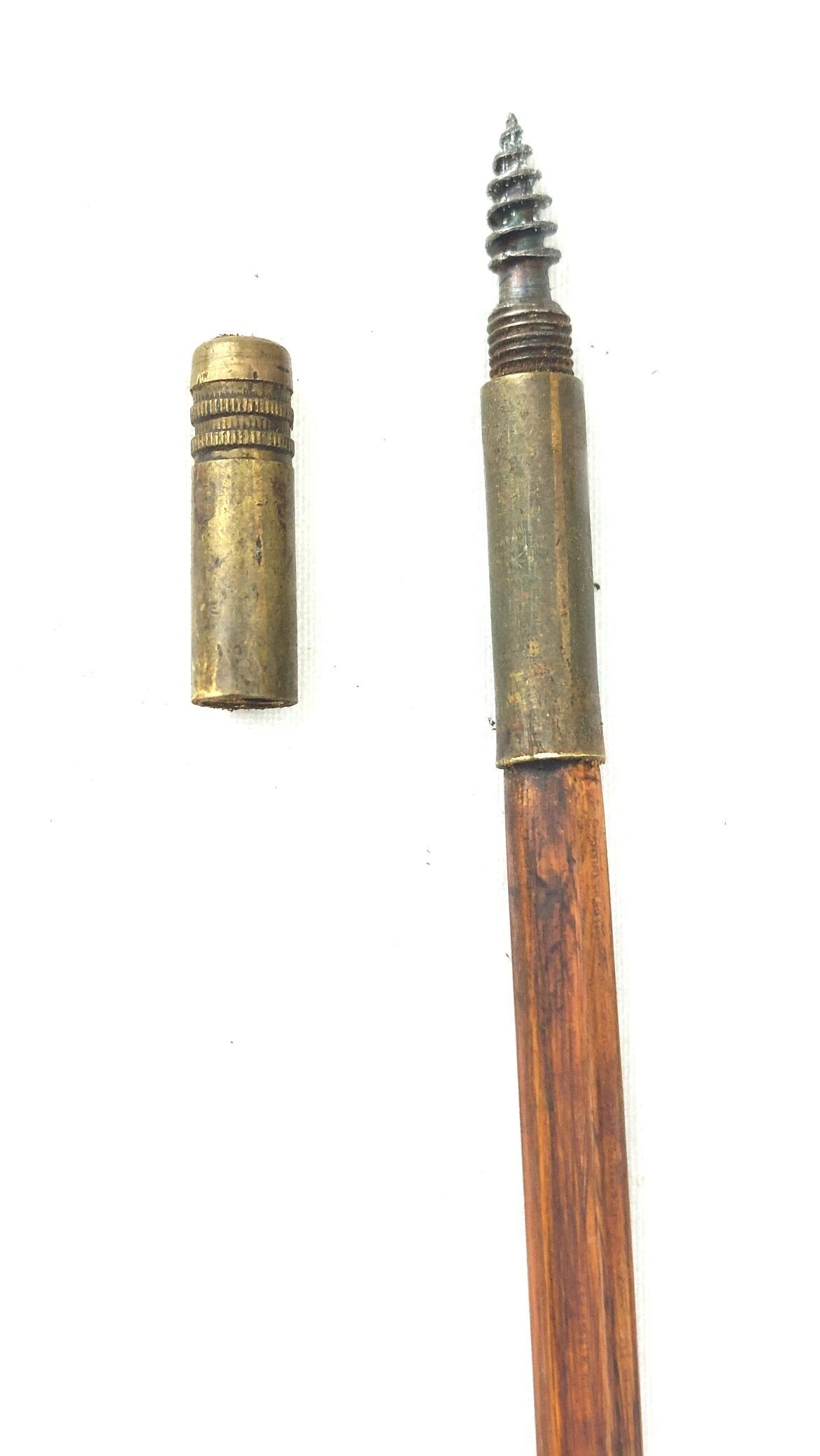
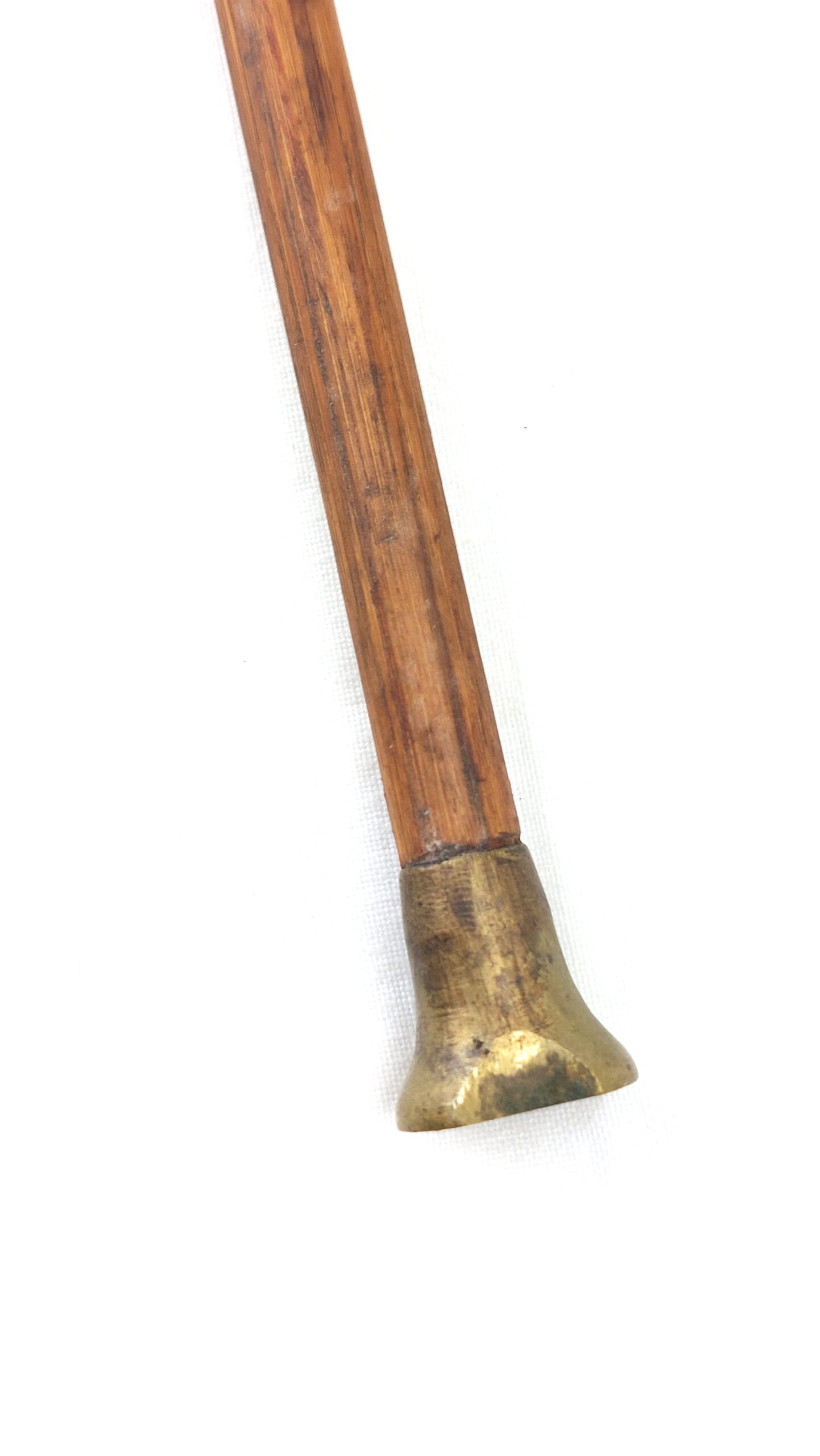
The original wooden ramrod is present, fitted with brass tip and threaded worm/screw attachment beneath a knurled brass cap — a desirable and correct survival.
The lock cocks and dry fires.
Approx. Measurements – Barrel length: 87 cm. Overall length: 127.5 cm.
Historical Note:
Tayler & Mander (occasionally recorded as Taylor & Mander) were active within the Birmingham gun trade during the late 18th and early 19th centuries, a period when Birmingham was the principal manufacturing centre for British sporting and military arms. Firms of this type frequently supplied both provincial sportsmen and the London retail market, producing well-finished sporting guns that balanced practical field use with tasteful decorative detail. By the 1820s–1830s the percussion system had rapidly replaced flintlock ignition in British sporting arms. This shotgun reflects that transitional period.
The inscription “Buller” on the underside of the butt is particularly interesting. The Buller name is historically associated with prominent West Country families, including the Bullers of Downes in Devon, long connected with military and country sporting life. While direct attribution cannot be confirmed without supporting provenance, the presence of a named inscription suggests private ownership and enhances the personal character of the piece.
Overall, this is a refined example of an early Victorian sporting fowler from the heart of the Birmingham trade.
*Condition*
The shotgun remains in honest, untouched antique condition. The metal surfaces show even age-related patination with scattered surface oxidation consistent with long-term storage. The lock engraving remains clear and legible. The barrel exterior shows wear and light pitting as expected for age. The walnut stock displays handling marks, small knocks and age-related wear commensurate with period sporting use. Chequering remains visible and well-defined. The butt plate and furniture show age toning consistent with the rest of the gun. The original wooden ramrod is present, fitted with a brass tip and threaded worm/screw attachment. Mechanically, the lock cocks and dry fires correctly. Please see photographs as part of the condition report.
RQMAOOXBEO_5436230932